Frontaer is an evolving motorcycle brand. We may earn affiliate fees on some pages of this site. Read more.

Do Dirt Bikes Have Speedometres?

Ever wondered if that dirt bike you just saw has a speedometer? Well, it depends.

Most late-model dirt bikes have speedometers fitted as standard. Some unregistered motocross, pit bikes and children’s dirt bikes don’t come with speedometers as they aren’t necessary for closed-circuit MX tracks. To ride your dirt bike on the road, you will need to have a speedometer fitted with mirrors, indicators and a licence plate attached.

You’ll find that these days, most will have them fitted though the dire-hard MX racing bikes don’t have them to consume space on the handlebars and reduce overall weight.

Speedometers on Dirt Bikes

Having a speedometer, otherwise known as a ‘speedo’, can help you track how fast you’re going on the track. However, once you’ve been riding a while, you tend not to notice your speedo and instead rely on your instincts.
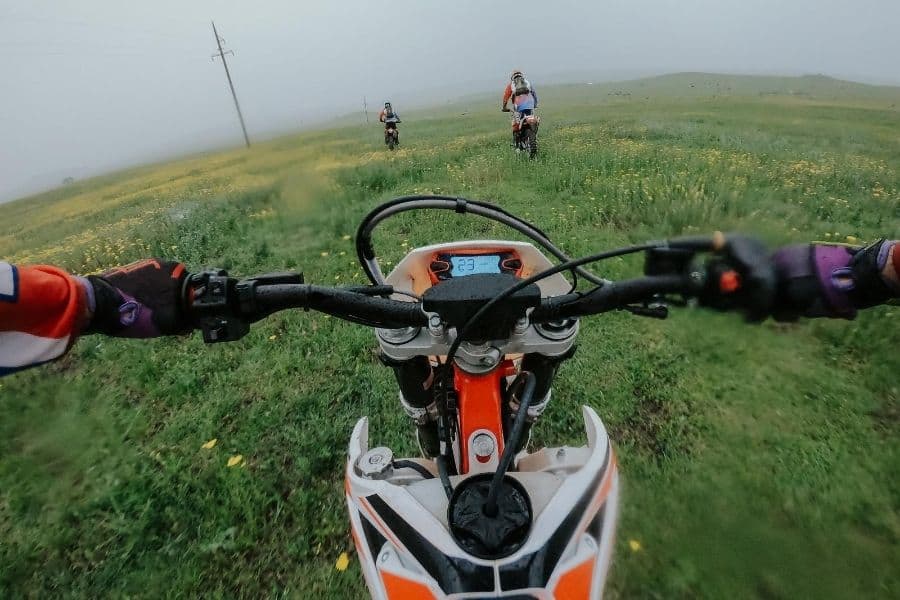
To say it another way – you’ll actually feel how fast you’re going as opposed to needing to rely on a gadget. The faster you ride – the more wind in your helmet – and thus, the faster you go!

Most dirt bikes still run an analog system while others like KTM are digital. It really depends.

Can I Ride Without a Speedometer?

You won’t really need a speedometer on your dirt bike for racing purposes in most cases. It’s only a legal requirement if you intend to ride on formed roads. You can even get a recreational registration in some states and territories where you can ride without a speedometer, provided you’re only riding on unsealed tracks and roads in the wilderness.

If you do break your speedo when riding, then it’s unlikely that anyone will know. The police aren’t able to tell that your speedometer isn’t working. In fact, there are riders who have ridden for years with faulty speedos and have avoided detection…so don’t worry too much about this.

If you are riding an adventure motorcycle – then yes – you’ll need a speedometer which is working, as well as the indicators, mirrors, lights and registration.

Alternative to Dirt Bike Speedometer

Let’s say your dirt bike speedometer isn’t working. What you can do is use your smart phone mounted to the handlebars. This technically isn’t a legal replacement, but certainly workable.

There are several apps that show your live speed through data but also work online. These are available in both the Play Store and App Store. Simply look through by searching for ‘speedometer’.

You can also buy replacement dirt bike speedometers on places like eBay and Amazon. Your local dirt bike dealership likely has some in stock too if you need one today. Also consider the used parts on Craigslist and Gumtree.

In Summary

While dirt bikes do typically have speedometers, this is most typical on registered dirt bikes. The MX bikes don’t really have them fitted as standard. If you do need one, you can install one quite easily.

If you do buy a dirt bike and it doesn’t have a speedo, then don’t be alarmed. It isn’t stolen and likely this is how it came from the factory. You can start riding without one if you’re riding offroad and may realize that you actually don’t need one…just like times gone by!

Continue Reading More Guides by Frontaer

[elementor-template id="4784"]

👉 39 Most Common Dirt Bike Terms (How Many Do You Really Know?)

🔥 21 Awesome Dirt Bike Riding Tips ('Cause We Want You Safe Out There!)

🌲 How To Go Camping With Your Dirt Bike (And Arrive Home Safely)

🔧 7 Tools Every Dirt Bike Rider Must Carry (To Avoid Those Awkward Rescue Calls)

🥾 Best Dirt Bike Boots That Go The Distance (Who's Got The Best for 2021?)

What is a Motorcycle Banjo Bolt? A Simple Guide

Keeping a banjo together is done with a banjo bolt…or at least we think so.

Banjo fittings consist of one half of a banjo bolt. Such fittings are used in motorcycle braking systems – from offroad dirt bikes to large adventure bikes, to street racing machines and cafe cruisers.

Essentially, by using a banjo fitting, you can pass pressurized fluid in braking systems as well as other mediums in which to transfer fluid under pressure.

Banjo Bolts Overview

There are two elements here. First, you’ve got the banjo fitting and then you’ve got the banjo bolt. The fitting is well sealed and holds fluid which then passes through the bolt.

A Banjo Bolt is a hollow bolt with a hole drilled on its side. By taking this approach, fluid is able to pass through the centre of the fitting which itself also has a hole down the geographical centre. This provides a tight seal while making routine maintenance for motorcycle riders and mechanics quick and easy.

For a strong seal, a washer is typically used and is recommended. Replacing either the washer, the banjo bolt or the fitting is quite easy with parts readily available online and in motorcycle dealerships.

Using Banjo Fittings and Bolts

This technology isn’t new though it is innovative. Banjo Fittings and Bolts are used for:

  • Oil transfer between various areas on motorcycles.
  • Fuel fittings for older motorcycles (pre-2000 era)
  • Transfering oil to and from the oil cooler.

They’re very much helpful to get a tight and solid fit where fluid shouldn’t be leaking. You can send low to medium pressure through these fittings and bolts without causing a leak, even when the oil is hot.

Why are they called a banjo bolt? This is because they look very similar to a musical instrument of the same name.

A simple yet clever idea they certainly area.

Continue Reading More Guides by Frontaer

[elementor-template id="4784"]

👉 39 Most Common Dirt Bike Terms (How Many Do You Really Know?)

🔥 21 Awesome Dirt Bike Riding Tips ('Cause We Want You Safe Out There!)

🌲 How To Go Camping With Your Dirt Bike (And Arrive Home Safely)

🔧 7 Tools Every Dirt Bike Rider Must Carry (To Avoid Those Awkward Rescue Calls)

🥾 Best Dirt Bike Boots That Go The Distance (Who's Got The Best for 2021?)

Do Dirt Bikes Need To Be Registered In My State?

So you’ve got a dirt bike and you’re curious if it needs registration to be ridden. Well, that’s quite simple:

Dirt bikes don’t need to be legally registered in most states, territories and jurisdictions provided you are riding on private property. You won’t be allowed to ride on public land which includes both formed residential roads as well as offroad tracks without registration.

By having a dirt bike registered, you’ll actually open up many more riding areas. Often it’s worth the expenditure as you can join other riders out there enjoying some great spots and camping trips.

Dirt Bike Registration Overview

While you don’t need registration if you choose only to ride on private property, you may have to register the transfer of sale with your local motor vehicles registration office. This will ensure that there is a record in case your dirt bike gets stolen.

They will often just need your VIN number as you won’t have a licence plate or registration plate number. In addition, you can typically only register a dirt bike if you hold a motor vehicle licence. This does mean that you can own a motorcycle, whether registered or unregistered, regardless of whether or not you have a licence to ride one.

Many people actually have unregistered dirt bikes at home which are reserved for private property riding. You’ll find ranch/station owners to have several motorcycles and quadbikes which are never registered because they don’t need to be.

Where to Ride Unregistered Dirt Bikes

Let’s say you’ve just bought an unregistered dirt bike and are looking for places to ride. Well, you’ll still have some options:

  • Your own private land. You can ride in your backyard if space permits. Some people buy up farms simply to go riding regularly and for free, though keep in mind that excessive noise could attact calls from neighbours and have police presence.
  • An organized motorcycle park. Most states have several of these where you pay an entrance fee and can ride for as much as you want. These are in far-flung places where noise complaints aren’t likely.
  • MX tracks. There are plenty of motocross places where you can ride an unregistered dirt bike. In fact – this is what they’re truly built for! It’s more of a competitive landscape though with less focus on casual riding.
  • Organized group rides. Sometimes organizers get together and organize group rides on several interjoined private properties for riders, even if their motorbike isn’t registered.

Don’t be the type that takes the risk of trying to ride your unregistered dirt bike on government land which is very much against the law. There are dirt bike police who monitor riders in offroad areas a long way from the city areas and often do licence and registration checks on the spot, with big fines involved if you break the law.

How to Get Dirt Bikes Registered

So it’s time to get your dirt bike registered. It can be a time-consuming process which is why buying a dirt bike which is already registered can be a much better idea. Some riders trade or swap their dirt bikes for one that’s already ready to go, but then again, that isn’t always feasible.

To get a dirt bike registered, you will need:

  1. A hardwired headlight that runs constantly when the engine is running.
  2. Turn signal indicators front and rear, as well as working tail and brake lights.
  3. A working horn, mounted dirt bike mirrors and registration plate mount.
  4. Speedometer which also shows turn signals, engine hours and highbeam/low beam settings.

These are the general things you’ll need to attach permanently which will add more weight to your motorcycle. Before you can get registered, these will need to be inspected by a government official for authenticity. Afterwards, your licence plate will be issued and you’ll need to pay an annual registration fee.

Dirt Bikes Which Can’t Be Registered

Yes, unfortunately, not all dirt bikes can be registered as they don’t meet EPA guidelines. You’ll have to check with your dealership first or the manufacturers’ website.

Generally speaking though, kids dirt bikes and very small adult dirt bikes can’t be registered as they don’t meet road-legal requirements. This is also the case with pit bikes and some Chinese motorcycles too.

This is why doing your upfront research is necessary for success.

Continue Reading More Guides by Frontaer

[elementor-template id="4784"]

👉 39 Most Common Dirt Bike Terms (How Many Do You Really Know?)

🔥 21 Awesome Dirt Bike Riding Tips ('Cause We Want You Safe Out There!)

🌲 How To Go Camping With Your Dirt Bike (And Arrive Home Safely)

🔧 7 Tools Every Dirt Bike Rider Must Carry (To Avoid Those Awkward Rescue Calls)

🥾 Best Dirt Bike Boots That Go The Distance (Who's Got The Best for 2021?)

Can I Start My Dirt Bike Without Oil? (Expensive Mistake)

So you want to know if you can start your dirt bike without oil. The answer to that is actually quite straight-forward.

You can start a dirt bike without any oil, however, it is NOT ADVISED. There is nothing physically stopping a dirt bike without oil from starting up, but internal grinding of bearings and catastrophic damage is likely. Within seconds, you can expect a loud sound of grinding parts within your engine.

There are some motorcycles that can last a few minutes running without oil though you shouldn’t test this. Eventually your dirt bike will seize up and you’re likely looking at a complete rebuild.

Running Dirt Bikes Without Oil

There isn’t any time when riding that you’d want to have no oil in your dirt bike. You see – dirt bikes need oil in order to lubricate parts which are operating at high speeds.

This oil stops your engine from seizing up as well as providing longevity for your motor. Just like a car motor, the oil does need to be changed regularly.

Frontaer would never advise a rider to go out on the tracks and trails without oil in their engine. It should be full, but not over-full and nor should it be empty.

Running dirt bikes without any oil is a quick way to make the engine seize up. You’ll hear a ‘rusty grinding’ sound emanating and you should turn off your dirt bike right away to prevent further damage.

Buying a Dirt Bike

If you were to buy a dirt bike, then always check the oil levels before starting the engine. If the seller says it’s OK run the engine without oil, then walk away quickly! It’s likely that the engine has already suffered some big damage.

It’s expensive to replace a dirt bike motor. If the oil is old, then you should drain and replace the oil with fresh oil before starting. You’ll be able to buy dirt bike oil for less than $50 for 5L from any motorcycle dealership.

Oil Cap Off

One of the most common reasons why dirt bikes are accidently run without oil is the cap being left off, or it unscrewed itself when you were riding. If you detect this, then quickly shut down your engine on the track.

From here, you’ll want to guage how much oil you’ve lost so far and then check the dipstick for the level. You might be alright to ride home on limited oil as long as it isn’t below the minimum on the dipstick.

You’ll always want to keep an eye during routine maintenance on the oil drain plug. This occasionally can unscrew itself and if it does, you’ll lose oil very quickly when riding.

Dirt Bike Sounding Funny

If you do hear this weird screaching sound coming from your dirt bike motor, then it could be a lack of oil. We recommend that you shut off your dirt bike right away and problem-solve the issue.

Things to check:

  1. Does your dirt bike have oil?
  2. Is the dipstick still intact?
  3. How tight is the drain plug?
  4. When did you last change the oil?

Also consider the quality of oil and avoid cheap-Chinese oils which have recently come on to the market.

Damage from Dirt Bike with No Oil

So with all of that in mind, what kind of damage can you expect to make? Plenty, actually.

The valves and pistons could seize and you’ll likely find little bits of metal inside your oil reservior. Let’s not forget the bearings either, with all of this possibly affecting the transmisions as well.

The cams and head might actually fair alright, as might the valve cover. It really depends on your make and model.

Essentially, a seized engine is likely and it will never run the same way again. Most riders simply do a full replacement of their engines which is both costly and time-consuming. You’re looking at $3,000 to replace a dirt bike whose engine has blown due to being run without oil.

In Summary

Don’t run a dirt bike without oil in the engine. At the same time, don’t buy one where you believe it has been run dry.

Manufacturers make these machines to be run WITH oil at all times. It keeps them lubricated and in tip-top condition.

Continue Reading More Guides by Frontaer

[elementor-template id="4784"]

👉 39 Most Common Dirt Bike Terms (How Many Do You Really Know?)

🔥 21 Awesome Dirt Bike Riding Tips ('Cause We Want You Safe Out There!)

🌲 How To Go Camping With Your Dirt Bike (And Arrive Home Safely)

🔧 7 Tools Every Dirt Bike Rider Must Carry (To Avoid Those Awkward Rescue Calls)

🥾 Best Dirt Bike Boots That Go The Distance (Who's Got The Best for 2021?)

How Many Dirt Bikes Fit Inside a Van? [A Basic Guide]

Many dirt bike riders like to transport their dirt bikes inside a van as it’s more secure during the journey.

The question remains though: How many dirt bikes can you really fit inside there?

It depends on the size of your van and the size of your dirt bikes, but generally speaking, you can fit 3 to 4 dirt bikes inside a van while standing upright. You’ll need to offset the handlebars with one trail bike in the centre facing rearwards to fit all bikes in properly.

You’ll certainly not be able to position your dirt bikes sideways in a van unless you’ve got a few children’s dirt bikes. Because these are shorter, it’s just easier to fit.

Why Have Dirt Bikes Inside a Van

There are various reasons why you’d want to use a van to haul your dirt bikes to the MX track or local riding trails.

Benefits include:

  1. Better security. No one can see your dirt bikes in transit and can’t follow you back home to see where your dirt bikes are kept.
  2. Waterproof. No water rusting away your handlebars or getting your seat wet.
  3. Load safety. Have you heard the horror stories of people whose dirt bikes fell off their trailer? It happens and it’s never pretty. Because your dirt bikes are loaded in a van – if the tie-down straps break, then the dirt bikes aren’t really going anywhere and if it’s packed tight, it’s very likely they will stay upright.
  4. A place to sleep. Going on a dirt bike adventure weekend? By having a van, it gives you a great place to sleep where you’ll only need an inflatable mattress and a sleeping bag. Neat!
  5. No registration or insurance for a trailer. Because you’re carting your dirt bikes inside the van, you won’t need a trailer to register or insure, or even have the risk of having that stolen too. Let’s not forget the eliminated risk of trailer-sway!

Certainly, they will cost more than a trailer and you’ll need more space to park a van. Some don’t fit inside of apartment garages so they are best suited to those who live in houses and have more use for the van than just carting around their dirt bikes.

How to Fit Dirt Bikes Properly

When loading your van with your dirt bikes, aim to ‘interlock’ your motorcycles effectively. The 1st and 3rd bike should go in forwards and the 2nd one go in rearwards.

Always place forward-facing dirt bikes in first and remove the rear-facing dirt bike first. It’s best to have the rear-facing dirt bike as the smallest one such as a women’s or kids dirt bike. You’ll also need to remember to keep space for a van loading ramp. You can buy these relatively easily through Amazon and eBay, or even your local dirt bike shop.

It’s also common for riders to throw their riding gear underneath their dirt bikes. This is a wise idea, but remember that you may have a minor undetected oil leak which could make your clothing smell pretty bad, so instead try and stack your gear higher. Some vans have places up high where you can hook stuff on like a gear bag.

Disadvantages of Dirt Bikes in Vans

While there are many advantages to having dirt bikes in vans, we must think about some disadvantages. These include:

  • The capital outlay. Vans aren’t cheap and you’ll need to invest in a decent van with low milage to make the most of out it.
  • They aren’t well suited towards apartment living and city life given their large size.
  • It’s hard to tie down your dirt bikes with limited space. At least in the back of a pickup or trailer, you’ll be able to walk around where as a van is more difficult, unless you buy a van with dual side doors.
  • Only 2 to 3 seats. If you’re into family trips with your dirt bikes, then it’s hard to find a 5-seater van that also has space for dirt bikes.

That said – their advantages do outweight the downsides in most cases. It really depends on how often you’re heading a far enough distance away from home. The occasional trip? Just buy a trailer. Camping every weekend? Get yourself a van so you can spend more time riding and less time worrying about your dirt bikes in transit.

Continue Reading More Guides by Frontaer

[elementor-template id="4784"]

👉 39 Most Common Dirt Bike Terms (How Many Do You Really Know?)

🔥 21 Awesome Dirt Bike Riding Tips ('Cause We Want You Safe Out There!)

🌲 How To Go Camping With Your Dirt Bike (And Arrive Home Safely)

🔧 7 Tools Every Dirt Bike Rider Must Carry (To Avoid Those Awkward Rescue Calls)

🥾 Best Dirt Bike Boots That Go The Distance (Who's Got The Best for 2021?)