Frontaer is an evolving motorcycle brand. We may earn affiliate fees on some pages of this site. Read more.

What is a Motorcycle Steering Dampener?

Have you seen steering dampeners on dirt bikes and ever wondered what they are used for? We’ve got the answer.

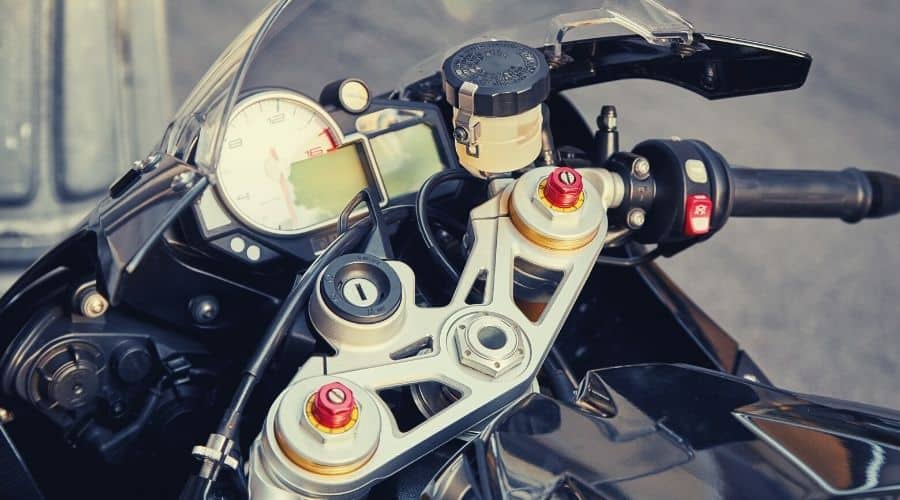
A steering dampener on motocross and adventure bikes reduces the ‘grunt’ or feedback that comes with steering on offroad terrain, resulting in smoother turns for the rider. The forces are reduced and so riders feel less fatigue and are more control of their motorcycle with a steering dampener, otherwise known as a stabilizer, installed on their cross members.

Through adding resistance to the steering, it prevents the ‘shock’ to the bike and gives a more relaxed feel to turning corners.

An overview of Motorcycle Steering Dampeners

Let’s think of it this way: Have you ever closed a heavy office or commercial door and noticed how it closes slowly? This is because there likely is a control box that adds resistance to the door with a gas strut. The same concept can be easily applied to motorcycles.

Inside, they operate very easily including the big name brands such as Scotts.

By having a steering dampener installed, there is much less shock when you suddenly fall into a pothole and need to recover. Essentially, the handlebars are less likely to twitch quickly and uncontrollably like a mountain bike.

You won’t be able to turn a dirt bike side to side quickly if it has a dampener installed, but you wouldn’t want to. It may seem counterintuitive, but out on the track, it’s actually a much better experience. Manufacturers don’t install these stock as they are expensive and not all riders need them, but they are certainly the top of our bucket list when we buy a new bike for the stable.

It might seem annoying at first when you are stationary and need to do a hard turn up the side trail, but at speeds, it becomes so much easier and less fatiguing.

Benefits of a Steering Stablizer

A steering dampener can stop the ‘tank slapper’ feel but not eliminate it entirely. They certainly do reduce speed wobbles so riders feel more confident as the wheel is right where it is meant to be, instead of being thrown around.

Think of it like suspension but for your handlebar…but not really. Same concept but different functionality, but often leads to a much better outcome for the rider, and especially those who ride offroad.

Adventure motorcyclists and dirt bike riders especially prefer to have an aftermarket stabalizer installed to feel safer at speeds on the B-grade and C-grade roads. They are more effective at speeds at more than 30 miles per hour. For the tight technical tracks, they unfortunately can be a bit of work as more force is required from the rider to turn the hydralics which operate this system.

Final thoughts

So then, should you get one? This really depends on your experience and style of riding. If you’re brand new to dirt bikes and have a limited budget, then leave this one on the back-burner for now and invest in quality riding gear and gain some experience.

You may want to spend your money on other parts first including better suspension and tyres.

For the intermediate or advanced rider, then we can higher recommend motorbike steering dampeners for riders both on-road and offroad. Look for quality brands that are stocked in stores as opposed to cheaper alternatives found on Amazon. These illegitimate knock-offs by Chinese sellers often don’t live up to expectations and nor do the manufacturers themselves even ride performance motorcycles.

Choose a model that has fine adjustment nobs as you’ll need to do some fine tuning to work out the ‘sweet spot’ for your bike, your weight and your riding terrain.

Continue Reading More Guides by Frontaer

[elementor-template id="4784"]

👉 39 Most Common Dirt Bike Terms (How Many Do You Really Know?)

🔥 21 Awesome Dirt Bike Riding Tips ('Cause We Want You Safe Out There!)

🌲 How To Go Camping With Your Dirt Bike (And Arrive Home Safely)

🔧 7 Tools Every Dirt Bike Rider Must Carry (To Avoid Those Awkward Rescue Calls)

🥾 Best Dirt Bike Boots That Go The Distance (Who's Got The Best for 2021?)

How To Keep A Motorcycle Helmet Cool

Keeping a motorcycle helmet cool on hot summer days is the desire for many who are riding out there in the warmer climates.

We’ve found some very interesting ways to help with climate issues over the years and reduce the heat for riders globally.

You can keep a motorcycle helmet cool by:

  1. Choosing a lighter colored helmet such as white or silver as opposed to black
  2. Maximizing the airflow by keeping the visor open while wearing sunglasses
  3. Replacing the interior lining to a material which allows the face to breathe
  4. Replacing the visor to a tinted lens which also has ventilation and flaps

Let’s go deeper on each facet.

Keep A Motorcycle Helmet Cooler

It’s super challenging to focus on the road ahead and the hazards you’ll encounter with a hot motorcycle helmet. Therefore, keeping it cool is very helpful.

This really starts in the buying process. It’s simply harder to cool down a motorcycle helmet that you’ve already bought when you could just buy a new one. But does this mean that you’ll waste your existing helmet? Not necessarily.

You see – some riders choose to have two helmets. One for winter riding and one for summer riding. By having a summer-specific helmet, you’ll also reduce condensation.

Let’s say you are currently in the market for a cool motorcycle helmet for summer riding. We would recommend helmets with strong ventilation, lighter colors and padding that breathes well.

Dirt bike riders are fortunate in that their helmets are generally cool and provide excellent airflow. Some riders may opt to use icepacks in their helmet which are removed just before wearing and going out for a tough race.

Tricks of the trade

Some things that we’ve learned in the journey include keeping the visor open when riding at slow speeds. You can wear sunglasses such as aviators when riding to stop bugs from catching into your eyes. Chances are that you’ve seen riders doing this before.

If your helmet is expensive and you don’t simply want to purchase a new one, then you can actually get the lining replaced. Most people do this themselves by ordering the replacement liners on eBay or Amazon.

You see – there are different materials used inside helmets. Some are used for thermal retention (to keep the face warm in winter) and others are used to wick moisture away for summer riders. You may want to keep the same helmet and simply replace the lining quite regularly as the seasons change.

Replacing your lens is also very helpful. By having a dark lens, you’ll actually feel cooler as your face isn’t being burned by the sun while you’re riding. It also negates the need to wear sunglasses and this in itself will promote more airflow around your face.

Lastly, consider the jacket you’re wearing. If you’re riding around with a hot chest and neck area, then the heat will actually transfer up into the helmet and therefore make the helmet hotter. So it may not be a helmet issue at all but the clothing that you’re already wearing that needs to be vented.

Airconditioned helmets

Did you know that you can now get motorcycle helmets with airconditioning? Sounds crazy and a little bit sci-fi, but the future is definitely here…though with minimal demand!

Feher makes the airconditioned helmets with mixed reviews. Some love the concept while others think it’s merely creative marketing for the soft rider. Then again, race car drivers have been using aircondtioned helmets for years though the external unit is attached to their car.

Such airconditioned motorcycle helmets will cool the face of the rider and allow them to be more focused while on the road. This generally leads to less fatigue so you can ride longer.

There is a small fan inside the motorcycle helmet which pumps in chilled air. In addition, there are vents and a seal to prevent the cold air from escaping.

When it’s too hot to go riding…well now you have an excuse to still get out there!

Continue Reading More Guides by Frontaer

[elementor-template id="4784"]

👉 39 Most Common Dirt Bike Terms (How Many Do You Really Know?)

🔥 21 Awesome Dirt Bike Riding Tips ('Cause We Want You Safe Out There!)

🌲 How To Go Camping With Your Dirt Bike (And Arrive Home Safely)

🔧 7 Tools Every Dirt Bike Rider Must Carry (To Avoid Those Awkward Rescue Calls)

🥾 Best Dirt Bike Boots That Go The Distance (Who's Got The Best for 2021?)

Wild Heart Motorcycle Bag Review: We Bought One!

A popular adventure motorcycling bag on Amazon is the Wild Heart saddle bag. We recently paid up to use this on our own bike.

Our thoughts are based on now owning this for 4 months and having used it on several occasions. Like you, we did read the reviews of Wild Heart ADV bags online first before deciding to make a purchase.

Let’s begin.

Wild Heart Motorcycle Bag Review

This bag is quite affordable compared to the $500 bags we commonly see in the adventure motorcycling space. Then again, does it live up to expectations?

We’re going to cover multiple facets of this bag. This includes:

  • The build quality
  • How waterproof it is
  • The strength of the straps
  • Suggested improvements

Keep in mind that this is an unbiased Wild Heart review. We’re not associated with this company.

Build Quality

The build quality is very strong and they use high-quality tarpaulin material. The seems are quite well done and the stitching is excellent. While the Wild Heart bags are made in China, they do live up to expectations and you can’t get a locally manufactured bag for the same price.

It’s not quite “up there” with the likes of Klim and other products, but it doesn’t pretend to be. Wild Heart has made the affordable alternative for those who don’t have silver-lined pockets in the adventure motorcycling world.

It’s evident that this bag will last several years and not be simply thrown in the garbage after 2 weeks, unlike many Amazon products these days.

Waterproofness

We tested this bag in the rain and it held up well. As the other reviews highlight on Amazon, no water entered inside this bag.

The zipper is waterproof as they use a plastic seam. We wouldn’t go throwing this in the swimming pool, though it does the job just fine to protect against rain and thunderstorms when riding.

While no rain got on the inside, most ADV riders are likely to use interior waterproof bags as well. This is something we would recommend especially for a sleeping bag. When those get wet, well your night won’t be so comfortable.

The Straps

The biggest pitfall for most bags is the straps and it’s also the biggest fear of adventure riders. Losing your luggage on the highway is both frustrating and embarassing, but also quite dangerous for other road users. You could be riding for miles before you even realize that it’s missing.

Unfortunately, the straps aren’t as thick as we would expect in the adventure motorcycling world. They just don’t have a high GSM and while they are wide, we would also love to see them thicker too. Even the buckles themselves could be made stronger, especially as the average rider would load up with 40+ pounds of gear for a weekend or extended trip.

Suggested Improvements

As we’ve noted, the straps could be stronger…but what else? Well, have segregated areas within the bags would be very helpful as well as 1 or 2 exterior products.

We would also love to see better colors since what they have available (bright yellow) doesn’t really go with most bikes, though it is a good visual reminder for other road users on the highways. It’s just terrible for stealth camping.

Then again – for the price you pay, this is a reasonably good bag and such improvements could increase the price significantly.

Going forward

Would we recommend the Wild Heart bags? Sure! For the budget-conscious individual. On the other hand, you can get brand-name bags like Klim on Craigslist and Gumtree which have been used but are in great condition for less than these prices, so a great alternative to consider.

Catch you out there!

Continue Reading More Guides by Frontaer

[elementor-template id="4784"]

👉 39 Most Common Dirt Bike Terms (How Many Do You Really Know?)

🔥 21 Awesome Dirt Bike Riding Tips ('Cause We Want You Safe Out There!)

🌲 How To Go Camping With Your Dirt Bike (And Arrive Home Safely)

🔧 7 Tools Every Dirt Bike Rider Must Carry (To Avoid Those Awkward Rescue Calls)

🥾 Best Dirt Bike Boots That Go The Distance (Who's Got The Best for 2021?)

Dirt Bike Police: This Is What They Look Like!

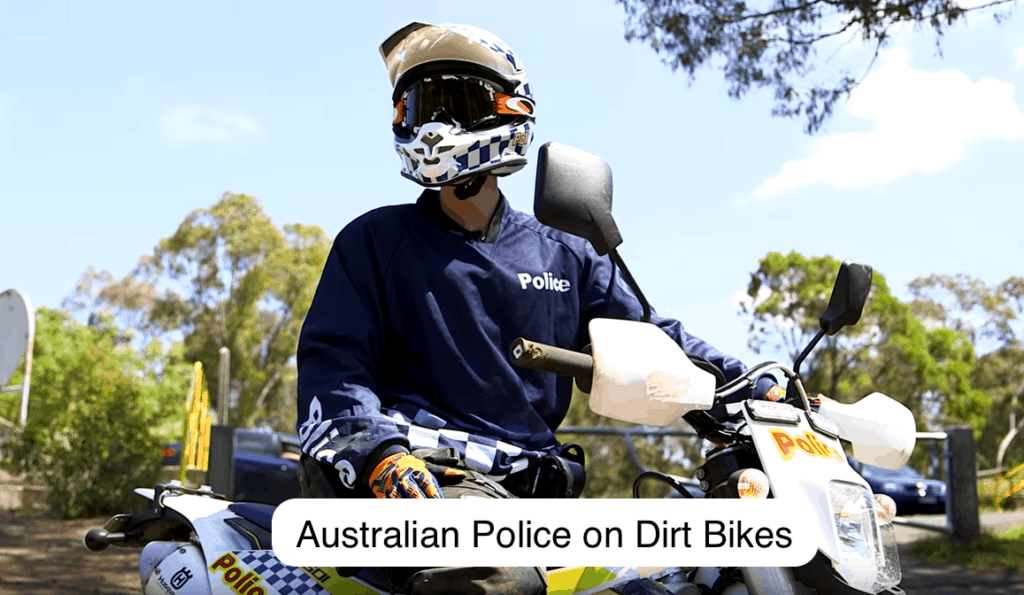
Did you know that the police actually ride dirt bikes offroad? It’s time to have a look at why they ride and what bikes they choose.

We’ll break this up into country-specific riders. It’s not a common sight to see the police venturing offroad with their dirt bikes, but they’re certainly out there!

Dirt Bike Police Offroad

Now, why do police actually venture offroad? Are they getting paid to blast through the forests and trails instead of doing paperwork and catching bad guys? Actually, there is a good reason why they’re on 2 wheels.

Police use dirt bikes for a variety of reasons including search and rescue, law enforcement (catching illegal dirt bike riders) as well as investigational work. You may find them deep in the forests or deserts uncovering illegal activities where their 4x4s simply can’t access and it would be too far to walk, or too challenging to use a helicopter.

You generally won’t see them doing tricks or out there trying to have fun. They in their line of work and simply are getting on with the job of police enforcement.

Types of Police Dirt Bikes

We always have a laugh as to the interesting bikes that the police force like to use. Generally speaking, police have budget constraints and cannot afford to spend a fortune on a fleet of dirt bikes.

The Suzuki DRZ-400 is the preferred dirt bike of choice for Australian police though the Husqvarna 510 is in use in some states. In the United Kingdom, the Yamaha WR250F and TTR250 are typically used by law enforcement officers. In the United States, there are various bikes in use which have more power and typically 450cc or higher.

It’s often the case that the police actually use underpowered dirt bikes and the riders themselves aren’t performance riders. For that reason, it’s actually have for them to intercept illegal dirt bike riders while out on the trails.

There are also limited powers that the police offers have. They cannot ram dirt bike riders though they have been caught using pepper spray which could have disasterous consequences.

Also, both male and female police offers do ride dirt bikes, but predominantly it’s men who ride.

Intercepting illegal riders

The most common reason why the police choose to use dirt bikes is to intercept illegal riding on crown land. Unregistered dirt bikes pose a common problem which leads to noise complaints, track destruction as well as dangers to walkers, cyclists and hikers.

They will also use 4×4 cars to target dirt bikes and block certain tracks or even create an ambush. Do look out for these traps or better yet – consider just getting your dirt bike registered.

You may be deep in the woods and suddenly encounter the police. They are simply doing their jobs and will ask for your registration, licence and possibly your insurance details. This is quite typical in the Victorian High Country and in other areas where there is a high volume of weekend enduro and adventure riders.

It’s very uncommon for the police to bring dirt bikes on to private property, though this does happen sometimes in regional Australia.

Keep in mind that it is illegal to ride off if you are being intercepted by a police officer on your dirt bike. However, their dirt bikes are very underpowered (the DRZ-400 is woefully inadequate as a performance dirt bike, especially for hot pursuits) and while the police do have the training, it’s often their workplace safety policies which prevent them from chasing down offenders.

Going Forward

It’s very evident that the police do like to ride motorcycles offroad. It’s not something you’ll often see unless you do head off the beaten track. Pay them respect and we can keep these riding areas open for years to come.

Continue Reading More Guides by Frontaer

[elementor-template id="4784"]

👉 39 Most Common Dirt Bike Terms (How Many Do You Really Know?)

🔥 21 Awesome Dirt Bike Riding Tips ('Cause We Want You Safe Out There!)

🌲 How To Go Camping With Your Dirt Bike (And Arrive Home Safely)

🔧 7 Tools Every Dirt Bike Rider Must Carry (To Avoid Those Awkward Rescue Calls)

🥾 Best Dirt Bike Boots That Go The Distance (Who's Got The Best for 2021?)

Can We Ride Dirt Bikes on Crown Land?

A common question we’re asked as dirt bike enthusiasts is: “Can I ride on crown land?” because after all, it looks so tempting.

Now the laws do differ country to country, but generally speaking:

You can ride your dirt bike on crown land provided it’s registered and has insurance. Motocross bikes are generally banned from being ridden on crown land, though in some states, recreational registration is available which is discounted from the normal price of registering a motorcycle. To get registered to ride on crown land, you will need a licence plate, mirrors and headlight.

Riding dirt bikes on crown or government land is allowable with recreational or full registration in most cases.

It’s always good to check with your local authority for clarification. Then again, there are exceptions that they don’t even know about.

Riding Dirt Bikes on Crown Land

Riding on government land is the best because it’s free! You don’t have to pay the expensive price for entry into a dirt bike property and have crowded tracks. Riding on crown land and away from others is the ultimate freedom.

Keep in mind that even if it is legal where you are, then there are some things to keep in mind:

  • Always ride on formed tracks and never create your own
  • Take off your mirrors but keep them with you on a backback or fender bag
  • Look for signage that permits or restricts certain vehicles such as dirt bikes
  • Be respectful of other users. You may find 4×4 enthusiasts on these tracks
  • Given the remoteness of some places, you can expect wildlife in abundance
  • Leave gates as you’ve found them. There are times that you’ll traverse private property
  • Always lock your car and trailer at the trailhead as you never know who’s around.

While the government beaurocrats and officers won’t venture out to see what you’re up to, this doesn’t mean you should be pushing the limits. There have been some great riding tracks which have been shutdown over the years due to irresponsible behaviour.

Again, keep in mind that the laws do differ between Australia, New Zealand, England, Ireland, the United States and Canada. There are then different laws between states and council regions regarding dirt bikes being ridden on government property.

Alternatives to Riding on Government Property

While free riding on government property with your dirt bike sounds excellent, and it is indeed a lot of fun, there are some great alternatives to consider. These include:

  1. Private property. You can approach local landowners if you can ride on their property.
  2. Dirt bike parks. Some farmers have decided to open their property to other dirt bike riders who struggle to find a good place to ride.
  3. MX tracks. There are plenty of MX tracks around, though they are small and aren’t suited to enduro riders.
  4. Organized group rides. Generally, a few people get together and organize permits where you can ride an unregistered dirt bike on crown land quite legally. This doesn’t happen regularly but you can look out for your local enduro club who will organize this.
  5. Consider getting registered. By having a registered dirt bike, it opens so much more potential to ride and explore most places quite legally. This could mean having to sell your current MX bike and buying an enduro bike, or see if you can convert your current ride to a road-registered dirt bike.
  6. Go for an electric dirt bike or mountain bike. Because of the nature of dirt bikes (loud, fast and aggressive), it’s understandable that local councils don’t want you riding on crown land. A popular alternative is electric dirt bikes which may be illegal to ride in your area, but generally aren’t detected by local law enforcement.

With these alternatives, you can open up so many more riding spots without so much getting yourself in trouble.

In Summary

We hope we’ve answered this question very straight forward. It’s always best to consider a road-registered dirt bike as their performance is almost identical to MX bikes while they can also be ridden on the bitumen and at night time.

This will open up so many more riding spots than just the local private tracks and you won’t need to be looking over your shoulder.

Continue Reading More Guides by Frontaer

[elementor-template id="4784"]

👉 39 Most Common Dirt Bike Terms (How Many Do You Really Know?)

🔥 21 Awesome Dirt Bike Riding Tips ('Cause We Want You Safe Out There!)

🌲 How To Go Camping With Your Dirt Bike (And Arrive Home Safely)

🔧 7 Tools Every Dirt Bike Rider Must Carry (To Avoid Those Awkward Rescue Calls)

🥾 Best Dirt Bike Boots That Go The Distance (Who's Got The Best for 2021?)