So you’ve just bought a dirt bike and want to learn how to jump over hills, so in this guide, we’ll teach you how to do jumping safely and quickly.
In a previous guide, we taught you how to jump with a heavy adventure bike. This is a good guide if you’re an adventure rider, but what if you’ve got a much lighter dirt bike? Well – dirt bike jumping just got a whole lot more fun!
How to jump with a dirt bike
Jumping successfully with an MX dirt bike is both an art and a science requiring smooth throttle and clutch control, with taking on a central standing position for the rider.
But let’s break this down for you into bite-sized chunks:
1. Set up your dirt bike first
Most accidents happen because riders didn’t have their dirt bike properly set up first. You need to be able to reach all your controls easily when jumping which includes the brake and clutch levers. Also – don’t forget to adjust your suspension for a more enjoyable rodeo session.
2. Scout for the right-sized jumps
There is no chance that you’ll be able to hit a Travis Pastrana jump your 1st time around. Even he started small and grew over time. What you’ll want to find are jumps that are appropriate for your size and experience level. For an adventure motorcycle, we recommended 10 inches while dirt bikes can go for 15 inch high jumps initially.
3. Ensure the path is clear
We wouldn’t recommend double-sided jumps initially. These are where there is a landing ramp after the jump. If you come up short or overshoot this, then you’re likely going to crash and could either injure yourself or damage your motorcycle. Look for a clear pathway after the jump itself.
4. Keep your dirt bike straight
A dirt bike which is jumping while cornering is likely to crash. You’ll want to ensure you hit the jump nice and straight to ensure a steady landing. If it’s a windy day then take this into account – you may have to ride slightly into the wind.
5. Crouch when jumping
Crouching is also known as the attack position, where you are more aggressive but also the ablest to respond to the terrain. This position with bent elbows and knees provides the best control while also being safe for your body parts. After a long day of jumping, you won’t feel so sore.
6. Select the right gear
You’ll want to keep the revs in the mid-range. For that reason, selecting the right gear for the jump, terrain and rider ability is very important. Often 3rd gear is ideal for total beginners, but don’t be afraid to adjust this based on your sprocket used and the gear ratios as they differ between motorcycle brands.
7. Throttle all the way
Throttle throughout the jump. There is little value in backing off and this will increase the chance of crashing if you do so. Use your clutch if you have to (to prevent stalling) but otherwise, especially for small jumps, keep that throttle right where you had it.
8. Land and ride on
Avoid the temptation to jump on the brakes immediately unless there is a hazard such as a tight corner. Instead, keep powering on after you land your dirt bike. This will help keep you upright while making you feel more confident like a boss.
MX and birt bike jumping tutorial
While we’ve shared some good tips here, it can be hard without a visual on just how to jump a dirt bike properly. Whether you’re on a backcountry trail or MX track, you’ll find this to be super helpful:
Our friends at the MX Factory demonstrate to beginners exactly how to jump their dirt bike properly. Essentially, focus on your body position, throttle delivery and landing with the throttle on.
The same principles apply to 2-stroke and electric motorcycles, though these have greater torque that needs to be taken into account. Electric bikes such as the KTM E-Ride also have no clutch but also have no chance of stalling mid-way through your jump.
In summary
Jumping with a dirt bike is easy once you master it. Unlike a fully loaded adventure motorcycle, you can certainly throw around a dirt bike and be less fatigued at the end of the day. Not only is it a lot of fun, but it’s also helpful to get you over obstacles while improving your MX lap times.
At the same time, such maneuvers are dangerous. Anyone who jumps well has years of riding experience behind them making the entire art of dirt bike jumping look easy. Just remember to wear all your protective gear and find a safe and quiet spot to practice. It’s all about the practice before perfection.
Neck braces for offroad motorcyclists have been available for 10+ years now, so isn’t it time to make them compulsory for all dirt bike and ADV riders?
This is an interesting discussion point that the team here at Frontaer decided to have. We wanted to look at the pros and cons of wearing neck braces for both MX riders and adventure tourers. At the same time, we’ll show you the best neck braces on the market.
A History of Motorcycle Neck Braces
When we look back at history, we’ve certainly come a long way. Back then, dirt bike riders would throw on a cheap helmet and at best, some casual boots and a jacket. Today, as motorcycle protective gear has massively advanced, so have the concerns of riders.
No one wants to be injured in a crash. It’s terrifying enough and the consequences could be there for life. As a result, we see much fewer people on the tracks and local riding trails without being kitted up with protective gear. From helmets and goggles to jackets, trousers, boots, gloves and padding on just about every vertebrae – it’s evident that the mindset of the average rider has certainly changed.
But what about neck braces? Why haven’t dirt bike riders adopted these just yet? While the arguments that ADV riders and weekend trail warriors aren’t racing at terrifying speeds, a crash of any magnitude has the potential to threaten the rest of your life.
Motocross riders have mostly figured this out, yet the recreational riders haven’t quite made it to the party just yet. To speed this along, could we not just mandate the requirements of neck brace usage just like helmet usage?
Chris Leatt – The Industry Pioneer
Go back 20 years ago and neck braces were things that you’d find in hospitals once people had a serious spiral injury. Then about 15 years ago they started appearing on the market lead by one guy – Chris Leatt. At that time, Chris as an avid motorcyclist was supporting his son who was racing. Sadly, Chris Leatt witnessed the death of a fellow rider.
As a South African doctor, he was extremely motivated from that time to all riders from the dangers of dirt bikes, whether racing or simply for recreation. From there, the famous “Leatt Neck Brace” as it later became known in the industry was born.
That very first neck brace was basic in contrast to what’s on offer today. Many riders scoffed at the idea of having to wear such a restricting device, but it then started to grow in popularity and acceptance. As that happened, other companies followed suit to expand on Leatt’s original idea with a motorcycle jacket and neck brace combination.
Today, neck braces continue to evolve but still offer the protection that Chris Leatt envisioned in 2004. They are now lighter, stronger and have more adjustments.
How they work
A dirt bike neck brace has one main objective: Protect the rider’s neck in the event of a crash. They also reduce the impact of crashes on minor parts of the shoulders and chest area, but protecting the neck is the main goal.
Essentially, dirt bike neck braces reduce frontal, rearwards and sideways movement (hyperextension) of the neck.
However, there is no gear on the market that can 100% prevent injury or death to a dirt bike rider. The safest way is to avoid riding altogether – but where’s the fun?
Manufacturers are always racing against each other to reduce the likelihood of severe neck injuries to motorcycle riders who wear neck braces. And in many instances, this is achieved.
However, neck braces work differently in every accident. This is because no two accidents are the same. And it’s a very hard request to get riders intentionally crashing for market research.
Common objections to neck braces
Let’s look at the common objections that riders give when choosing whether or not to wear a neck brace
“It’s hard to turn my neck”
True. Neck braces simply make it harder for riders to turn their neck quickly. While they have evolved since Leatt’s first design, they still have a sense of restriction for the rider.
“They are expensive”
False. Life in a wheelchair is expensive. For less than $500 you can get a brand new neck brace. Compared to your motorcycle, this is very marginal and roughly the same as a top-quality helmet.
“I won’t look cool”
It doesn’t matter. You’ll look perfectly fine on an MX track. As for trail riding and global adventuring, most people won’t even notice. And when you’re riding solo and 100 miles from the nearest help, you’ll be feeling a lot more confident.
“I heard that they break easily.”
False. Motorcycle neck braces are made from super strong materials with carbon fire being a fan favorite. It would take an awfully massive crash to break a neck brace, and even if it did, it’s likely to have prevented further injuries for the rider.
“Are neck braces heavy?”
No. Neck braces are now under 1 pound with dirt bike riders rarely feeling the weight. After all – helmets and boots already weight quite a bit.
Genuine protection or marketing fad?
So are neck braces actually providing you genuine protection? After all, companies like Alpinestars have jumped on the bandwagon with a lot of marketing power.
And when you consider the prices of these devices, it causes riders to become a little sceptical. Especially when you see riders on the MX track still not wearing braces for years.
Now in our honest opinion, they are worth their weight and restrictions. Genuine protection is given to the rider, even if they never have a significant crash in their life.
Similarly, there are millions of people who have never been in a car crash, despite being in their retirement years. Yet every time, without hesitation, they still put on a seat belt.
As for marketing fad, there is some element of truth. Yet the same could be said for motorcycle helmets and personal injury insurance. These companies capitalize on protecting people from serious injury.
But if we can put those thoughts aside, these companies also invest millions in design and development, while progressively reducing their retail price points.
Best Adventure Riding Neck Brace
While this article is featured around dirt bike neck braces, our predominant audience is adventure riders. Those who head off for adventures around the state…or even around the world.
ADV riders are a unique bunch – we ride the roads and the trails. As we’ll rarely hit the MX track and the inherent hazards of landing a jump short, we need something different. A type of neck brace with the flexibility to turn our heads properly, while also providing great value.
Leatt’s STX Road Neck Brace is the best for ADV riders globally
From our research, the best currently available neck brace for adventure riders who do weekend trips or even round-the-world adventures is the Leatt STX Road Neck Brace. This device allows you to look over-the-shoulder much easier when changing lanes, while also being adjustable when riding adventure jackets.
This model, while new to the market, has had extensive testing. It’s even certified as Personal Protective Equipment. Through using Alternative Load Path Technology (ALPT®), this neck brace transmits energy from your helmet to your body and thereby reduces your risk of a significant neck injury.
Since Chris Leatt launched his first prototype early in this century, many companies have tried to copy the original design. Luckily Chris was able to evolve over time and has become a household name in the MX world.
In 2020, we’ll look at the top 5 neck braces that money can buy:
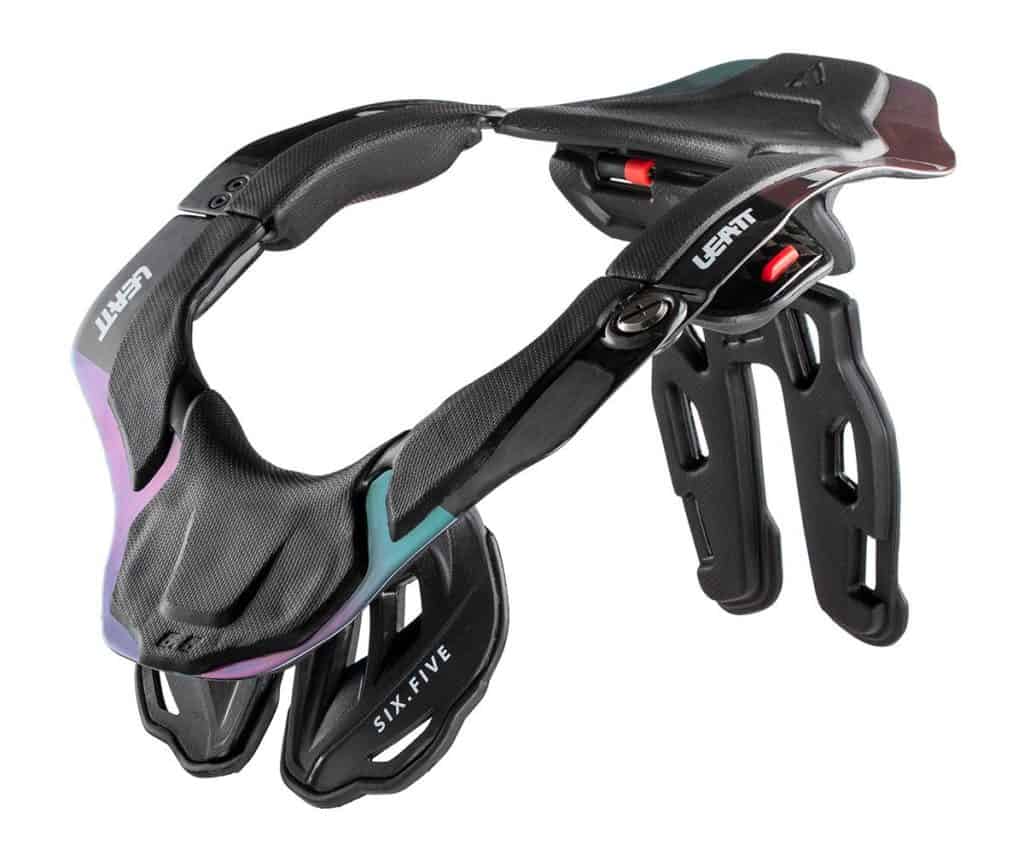
1. Leatt GPX 6.5 Motocross Neck Protector
If you’re looking for the best-in-class gear that’s going to protect your neck, then you can’t look past the GPX 6.5 Neck Protector. Many professional riders have worn this with extensive gearing and development.
It might look big but it weighs at less than 700gs. This is a carbon-fibre neck brace which is super stiff and not so flexible like other cheaper braces on the market. At the same time, there is some very good flexibility with only two sizes available: Small/Medium and the Large/Extra-Large. If you’re unsure on which size to choose, then they provide a very helpful sizing diagram.
One of the coolest features is the emergency release function. Let’s say you indeed have a big accident and removing your neck brace would potentially cause you a life-long injury. Well – medics can actually release the neck brace with a simple button.
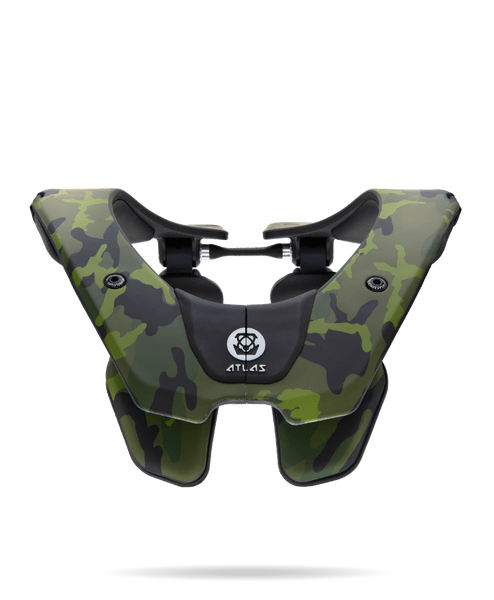
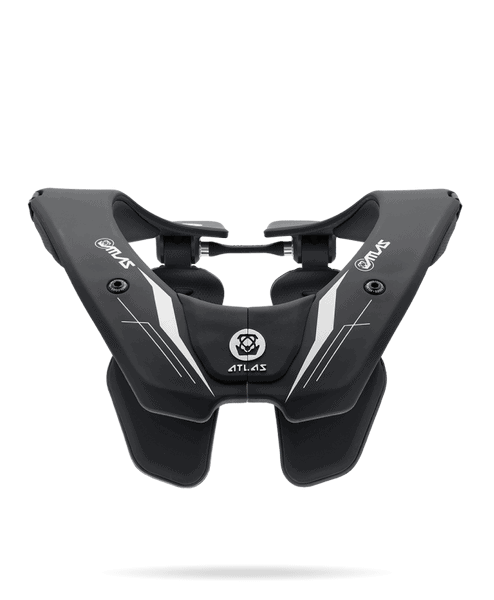
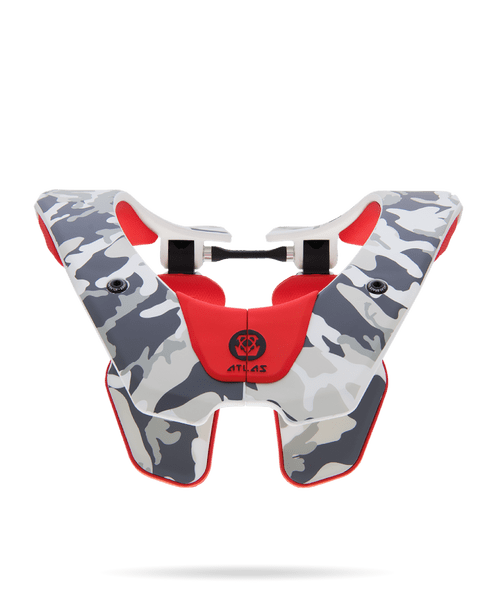
2. Atlas Carbon Motocross Neck Brace
Needing something marginally lighter than the Leatt? Atlas has the solution. While being very minimalistic in its looks, it’s made up for in the features. And unlike the Leatt models, there is some reasonable flexibility in this neck brace allowing riders to really twist properly.
What we really love about this neck brace is adjustability. This particular model has a lot of it. So much so that many riders report that riding with this neck brace is like it’s not even there. If you’re the type of person who’s been holding off as you don’t like the restrictions of typical dirt bike neck braces, then this model is for you.
There are straps included that we recommend that you wear otherwise it tends to bounce around on MX tracks. Those doing weekend trails probably won’t notice it as much, nor will the ADV rider who wants this model for that little bit of extra insurance.
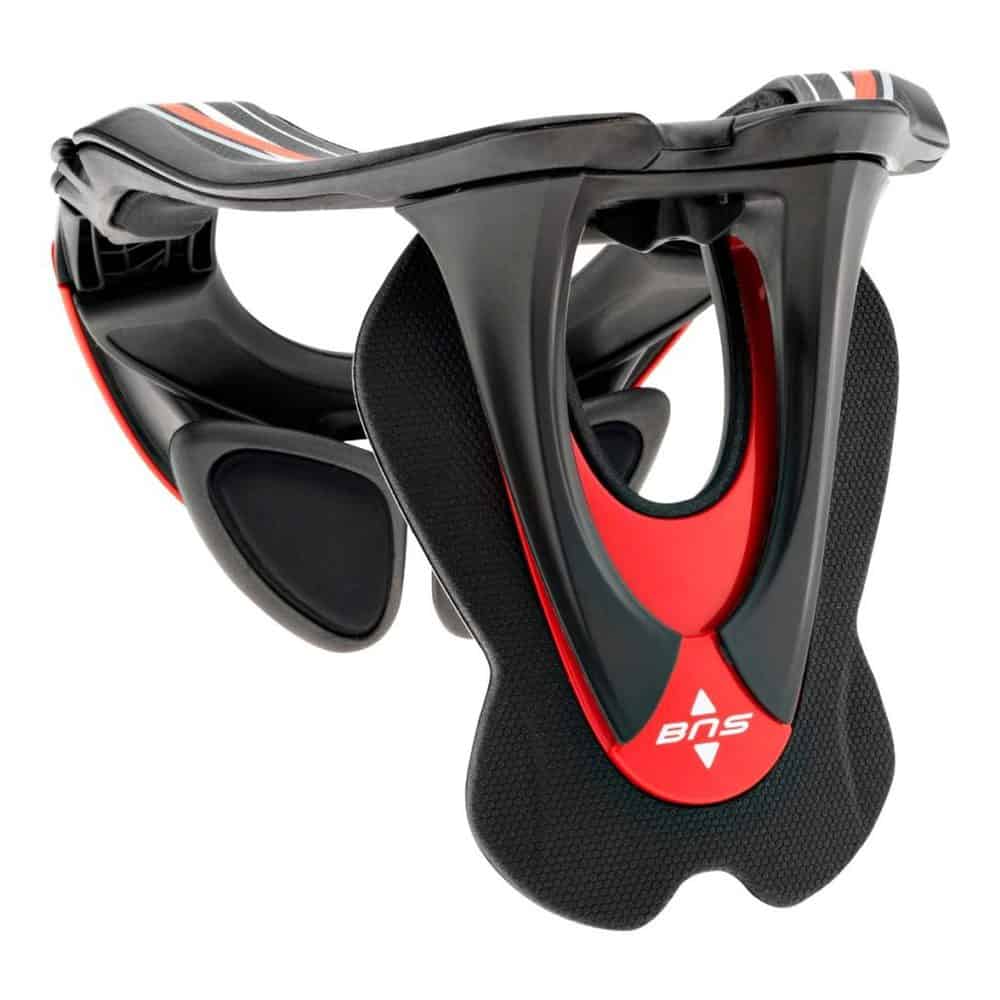
3. Alpinestars Tech Bionic Neck Protector
Motocross neck braces are typically boring until you find your hands on the Bionic by Alpinestars. When we refer to manufacturers with big marketing budgets, Alpinestars is one prime example. They took Leatt’s original design and built on it with both function AND style.
This is the Alpinestars Tech Bionic Neck Protector for dirt bikes
Unfortunately, this model is slightly heavier at 735 grams, which is damn heavy for a carbon brace. They use some extra material with two front pads which sit on either side of your sternum. Now, this also means that additional heat is produced which summer riders may not like so much.
However, many riders report a positive experience in this model. From the fit and the adjustability, paired with the very cool design – it all helps riders progress to owning a model.
4. EVS Sports Race Collar
Looking for something that doesn’t break the bank? EVS has you covered. These minimalistic neck braces do provide some reduced support and it’s certainly better than none at all.
You can often purchase these for under $70. And with the lower sizing and reduced features also comes with lower weight. At just 2.3 pounds, you’ll almost not even notice this, nor will your wallet.
The best part: You can buy these for children as well. We’ve shared previously on the best dirt bike protection for kids and the neck brace is something we now recommend.
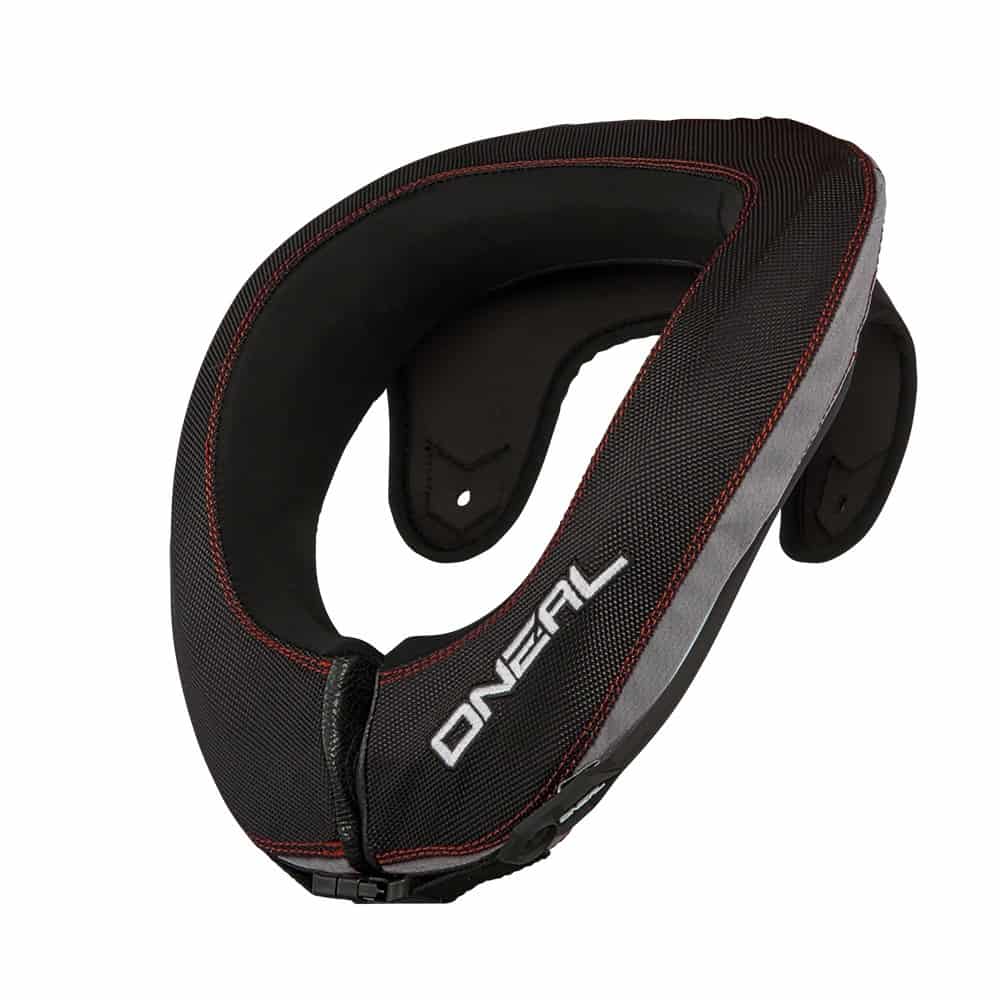
5. Oneal NX-2 Adult neck brace
Available exclusively in Australia, the oNeal neck braces are very affordable and available for under $50 AUD. For the dirt bike rider who just wants some basic protection, then it’s hard to look past these.
Neck protection collars like these lack the more advanced protection that the advanced and science-backed protectors that Leatt, Atlas and Alpinestars have put forward to the market. But if neck braces are compulsory on your MX race track, then this could be just what you need right now.
These connect to most chest protectors and come with a washable liner. Also available for kids who need neck protection when riding.
The final choice on neck braces
With almost every country, the only bit of protective gear needed as regulated through country laws is a helmet. Anything worn beyond this is entirely the choice of the rider. For now.
As more countries adopt rules to protect both motorcycle riders and pedestrians, you’re likely to see more gear required to ride with. We imagine a neck brace is the first essential bit of gear.
For now, at least, the final choice lays with you. For the most part, it also depends on the style of offroad riding that you’re partaking in.
Are you using a neck brace currently? If not – why not? Let us know in the comments below.
This guide explores the many dirt bikes for kids under 12 that are available in the market today, from Hondas to KTMs and Yamahas.
Children are mesmerized by the fun that can be had on two wheels. Ripping up the dirt and racing their friends are memories that they will cherish for a lifetime.
Choosing the right size and type of dirt bike for a child can be tricky. You want to give them a bike that’s the right size but not too powerful just yet.
Best Dirt and MX Bikes for Kids
In writing this guide, I’ve taken on my industry experience and also conducted a lot of research on what other parents have bought already.
I’ve broken this down into age groups: 5, 6, 7, 8, 9, 10, 11 and 12. I haven’t split this into gender as boys and girls can generally handle the same bikes at the same age.
Before that, I wanted to provide some insights on what parents should be looking for:
Children’s Dirt Bike Seat Height
More important than the power or manufacturer is the seat height. You’ll want your child to stand flat-footed from Day 1. Sure – they will outgrow the bike in a few years but confidence is key when riding. If they can’t touch the ground properly then this massively affects their confidence on the trails.
This children’s dirt bike sizing chart which takes into account their standing height will be helpful:
Kid’s Standing Height (Centimetres)
Seat height (Inches)
Engine Capacity (Power output)
Under 100cm
20″ to 23″
50cc dirt bike or electric dirt bike or electric balance bike
100cm to 110cm
23″ to 25″
50cc to 80cc
110cm to 120cm
24″ to 26″
50cc to 80cc
120cm to 130cm
26″ to 28″
80cc to 110cc
130cm to 140cm
28″ to 30″
80cc to 110cc
140cm to 150cm
29″ to 31″
110cc to 125cc
150cm to 160cm
30 to 32″
110cc to 125cc
Just remember that when measuring, your child will stand 20mm taller with boots on. We recommend boots highly and have written more on protective gear for kids who ride dirt bikes. Also, while this makes sense to many people, be sure to measure your children without their helmet off.
Weight of the Motorcycle
Another important factor is the weight of your child’s dirt bike. You won’t want anything super heavy, especially if they are smaller than normal.
Not only is it harder for them to control heavy dirt bikes, but it can pin them down in the event of an accident. Often dirt bikes are heavier than the child themselves.
This is yet another reason to get an electric dirt bike. Generally, these are half the weight and don’t have a hot engine which could cause 3rd-degree burns.
Brands and Dealers
There are many fancy companies with bling motorcycles, but you can get a cheap dirt bike for kids quite easily off Craigslist. This will potentially save you thousands of dollars.
But be warned! Stay away from the no-name brands. We only recommend the big 4: KTM, Honda, Yamaha and Suzuki. Buy these 2nd hand and you’ll save a fortune.
The no-name brands are plagued with issues and poor quality components. Finding parts for these are very difficult as well, paired with low resale value.
Often dealers actually have used dirt bikes. All you need to do is ask them since other families trade in their old dirt bikes at the end of each year.
Automatic vs Manual
Some dirt bikes for kids are automatic while others are manual with gears and a clutch. Which one do you choose? That’s quite simple actually.
If this is their 1st dirt bike, then get an automatic. We even recommend an electric dirt bike as they will be lighter and therefore easier to handle.
For children older than 10 years old, it’s a good time to introduce them to clutch control. For those who are younger, stick with the one-speed machines.
A great dirt bike for learning on in Australia is the Honda CT110. This is a farm favourite and virtually indestructible which is why Australia Post use them so much.
2-Stroke vs 4-Stroke for Kids
Lastly, a common question out there is whether children should have 4-stroke or 2-stroke dirt bikes. We can answer that question very easily.
For children who race motocross (MX), 2-stroke dirt bikes are very common. For those who just want to ride around the farm or some fire trails, 4-strokes are more popular.
In fact, the entire racing community has started moving away from 4-strokes. They are much faster nowadays and many people are sick of mixing fuels.
2-strokes are also very noisy. If you live near your neighbours, then make sure you get a 4-stroke. They will definitely praise you for it.
As you might have noted in this kids bike sizing comparison, we highly recommend electric dirt bikes. These have 1-stroke and have constant power.
Best Dirt Bikes for 5-Year Olds
There are some very good contenders on the market to help children get started with offroad motorcycling. Through our experience, we’ve rounded up these models:
The top 3 dirt bikes for 5-year-old children are the Kuberg Electric MX bike, Yamaha PeeWee 50 (PW50) and Honda CRF50F and the These can include training wheels for 5-year olds who are yet to balance proper balance and control.
You’ll find these dirt bikes easily available in the United States, Canada, United Kingdom, Australia and New Zealand. Look out for offers from Craigslist and Gumtree and you’ll find parents upgrading because their son or daughter has outgrown their bike.
Best Dirt Bikes for 6-Year Olds
At 6 years old, most children know how to pedal a bicycle confidently. However, they might not be ready for a bigger dirt bike just yet.
The best dirt bikes available for 6-year-olds are the KTM 50SX Mini., Yamaha’s PW50 and the Honda CRF50F. Each of these children’s dirt bikes has a small petrol-driven motor similar to a chainsaw and automatic gearbox which is ideal for the 6-year-old who is learning to ride motocross and trails.
The KTM, in particular, is a more powerful beast than the Yamaha and Honda. For that reason, you can expect to pay twice as much.
Best Dirt Bikes for 7-Year Olds
At 7 years old, children are really starting to gain some awareness and agility when riding both bicycles and dirt bikes. They might even try some small jumps and enter races.
Children who are 7 years old will do well with a Yamaha TT-R50E, KTM 65MX and (depending on their height) the Suzuki JR80. These 2-stroke dirt bikes will give kids who are 7 a lot more fun than the entry-level bikes on the market, while being affordable for parents too.
Just remember that the weights for these dirt bikes are higher. If your child is underweight for their height, we would recommend an electric MX bike instead.
Best Dirt Bikes for 8-Year Olds
Children who reach 8 years old are very much now into the riding scene. They might ponder often about riding their bicycle or motorcycle on weekends while at school. There are some really good options out there now:
The KTM 85 SX is widely regarded to be a great dirt bike for boys and girls who are 8 years old. However, the power is quite excessive so it’s best for children who are quite experienced. The 2 best alternative recommendations are the Yamaha PeeWee 80 and the Honda CRF80F.
Keep in mind that at this stage, height differences really start to occur within children. So it’s best to head into a dealership and try a few dirt bikes before deciding.
Best Dirt Bikes for 9-Year Olds
At 9 years old, children will pretty much use the same dirt bikes as their 8-year old counterparts.
For 9-year-old children, the KTM 85 SX is the best dirt bike in the market. However, the price is high and the dirt bike itself suits experienced riders. Now, for 9-year-old kids who haven’t ridden before, the Yamaha PeeWee 80 and the Honda CRF80F are the most affordable and easy to learn.
If this happens to be their 1st dirt bike, then this is something they can certainly keep until their teenage years.
Best Dirt Bikes for 10-Year Olds
We’re now into double-digit years! Kids will have a heightened sense of ownership and will be very eager to get out on to the dirt trails on weekends.
We recommend Yamaha’s TT-R110E for 10-year olds as well as the Honda CRF110F and KTM’s 85SX. While the KTM has a smaller engine, it is more responsible and agile, and simply a lot more fun for kids at 10 years old.
At this stage, most kids will handle gear shifting and clutch control quite easily. This helps them in their teenage years when they finally get their motorcycle licence.
Best Dirt Bikes for 11-Year Olds
Children at this age will have a sense of what type of riding suits them. Whether it’s MX tracks and weekend racing, or simply hitting some local trails – they will be eager to leave the homework behind.
We can easily recommend the KTM 85 SX SW Minibike as the best dirt bike around for 11-years old, however, it’s really for children who are experienced riders. The next best recommendations are the Yamaha TT-R110E and Honda’s CRF110F which are more affordable.
As always, head into a dealership to get measured properly. Generally dealerships only stock one brand so plan a day where you visit multiple dealerships at once.
Best Dirt Bikes for 12-Year Olds
This is the last year before their teenage years so kids are really starting to rise in their maturity and their height. For this reason, we can really recommend some more powerful offroad motorcycles.
For downright reliability, Yamaha’s TT-R125LWE is the best dirt bike for a 12-year old while the KTM 125 SX wins for outright performance and race-ready attributes. Choose the Honda CRF125F for something in the middle ground with good value for money.
This is likely a dirt bike that will last until they are 15 or so. For that reason, choose something wisely. The KTM has both the looks and track-orientated agility, so while it might be a handful now, they are likely to get used to the power in a few months.
Tips For Buying
Once you’ve decided on the right dirt bikes for your children, it’s time to head out the front door.
If you’re buying new:
Look at the warranty available and what it actually covers
Shop around for finance options as dealerships could overcharge
See if you can get a package deal including a dirt bike trailer
Ask them if they can reduce the seat height through the suspension
If you’re buying used:
Do your homework! The dirt bike could actually be stolen
Check with your state’s registration body for finance owing
Ask for a test-ride and run the engine for at least 10 minutes
Look for any significant wear marks as evidence of excessive use
Often it’s better to buy used dirt bikes from dealerships. They have a reputation to maintain so they will ensure it has a clear title.
Wrapping Up
Buying your son or daughter their 1st dirt bike will be a moment to really cherish. Don’t rush in immediately but instead do your research and homework.
Stick with the main manufacturers who have decades of reputation with many parts available. The older dirt bikes shouldn’t be discounted either, especially as children are prone to crash. If they scratch up the plastics then you won’t be frustrated and neither will they.
Above all else, praise them for having the enthusiasm to enter this sport and enjoy this family time together.
This is a complete guide for trail bike riding for total beginners who want to learn more about getting off the beaten track.
Let’s jump straight on.
Getting started with trail bike riding
Many riders cruise the nice smooth bitumen for years before waking up one morning and discover this entirely different world of trail riding with dirt bikes.
After all, road bikes have become too locked with technology. From traction control to variable speed trims, brake controllers to cruise control and heated handlebars and mirrors. Essentially we’ve lost the bare-bones approach to riding on two-wheels.
Let’s not forget of course the police who simply hate seeing road bikes even creep a few miles over the speed limit. Where all that power on tap goes unused.
Welcome to the world of trail riding with dirt bikes. Where your wildest adventures can become reality once again.
That thrill you once had when you first got your licence all those years ago. You can start living those feelings again, today.
But where do you start? How do you learn about everything? Well – with our complete beginner’s guide for trail riding.
1. Downgrade your bike
While that 600cc or 1000c superbike got you up to the speed limit in under 5 seconds, you can totally forget that offroad. It’s very much unnecessary.
For most novices, they simply buy the wrong bike. That 600cc KTM on the dealership floor looks nice and pretty until you realize just how heavy it is.
Sadly, most dealerships simply recommend a trail bike which is too heavy for the rider to manage on tight single track and riding uphills and downhills.
The lighter your bike is, the better it is. From handling to control, to straight forward rider confidence – avoid the heavy enduro bikes.
Essentially, we propose that you downgrade your bike to something more manageable. Let’s look at our basic trail bike rider sizing chart:
Frontaer Beginner Trail Bike Sizing Chart
Rider Weight
Engine Size
Recommended?
60kgs /132lbs
250cc and below
Yes – well suited
70kgs / 154lbs
250cc and below
Yes – well suited
80kgs / 176lbs
250cc and below
Yes – but will lack power
90kgs / 198lbs
250cc and below
No – limited power for rider
60kg /132lbs
250cc to 450cc
No – too much power
70kgs / 154lbs
250cc to 450cc
Depends on fitness and experience
80kgs / 176lbs
250cc to 450cc
Yes – well suited
90kgs / 198lbs
250cc to 450cc
Yes – well suited
60kg /132lbs
450cc to 650cc
No – too much power
70kgs / 154lbs
450cc to 650cc
No – too much power
80kgs / 176lbs
450cc to 650cc
Depends on fitness and experience
90kgs / 198lbs
450cc to 650cc
Depends on fitness and experience
60kg /132lbs
650cc and above
No – way too heavy unless adventure riding
70kgs / 154lbs
650cc and above
No – way too heavy unless adventure riding
80kgs / 176lbs
650cc and above
No – way too heavy unless adventure riding
90kgs / 198lbs
650cc and above
No – way too heavy unless adventure riding
As you can see, the smaller bikes are almost always the better choice. If it doubts, you can go for a slightly bigger size than a 250cc.
The only instance where you’ll want more power is sand riding, though, for many riders, they won’t be doing too much riding in the Sahara desert.
2. Wear the right gear
Perhaps the most important thing is to actually get the right trail bike riding gear.
While we’re quick to protect the kids with riding gear, most adults try to go with the basics. That is until they crash and realize what a world of pain they are in.
There are many options out there with many brands providing excellent value. It’s often a case of getting what you pay for and you’ll find bargains on Craiglist/Gumtree often.
For the basics, we recommend:
A very high-quality helmet that is breathable. Go into the dealership and try a few on. Don’t buy these online as sizing is difficult.
Paring the helmet with the perfect set of goggles. You’ll need several different lenses: day, night and jungle riding.
High-quality dirt bike riding gloves. Even gloves from the adventure or MX aisles work very well and cost very little.
A set of either dirt bike or adventure riding boots. These are different and the type you choose depends on your style of riding.
The right clothing. Leave the jeans at home and invest in riding trousers and a quality jersey paired with elbow and knee pads
If you value your spinal health and want to reduce the risk of quadriplegia then we recommend a neck brace.
You might also want to pack a quality backpack with a hydration bladder where you can also fit a puncture repair kit and some healthy snacks. Also, don’t forget the first-aid kit as you’re likely to crash and still injure yourself, despite your best intentions.
3. Join group trail bike rides
There is no reason for you to go on this new journey alone. There are many trial bike riding clubs where you can join an organized ride with experienced folk.
Many of them have what we call ‘sweep riders’ – essentially riders who stay at the back of the pack and ensure the slower riders aren’t left behind.
Not only will you make new friends, but you’ll also discover new riding spots and feel more confident knowing that there is the backup right then and there.
Our recommendation is that you choose the back of the pack. Let the group leader know that you’re new to offroad riding and you need to build confidence.
Everyone has been a beginner at some stage in their journey. They will respect your honesty and let other riders know to keep an eye out for you.
4. Own the apprentice title
Let’s face it – you’re going to crash. And you’re going to crash more than once too. You’re an apprentice and you’re learning to ride offroad which is different.
Instead of being frustrated, choose to own the title. From this place, you’re able to open your mind to the potential of getting better as a rider.
The best way to learn how to be a better rider experiences on the trails. The 2nd best way is YouTube and the many videos dedicated to skills development.
You could easily spend hours watching all the content here. But don’t get too far stuck down this rabbit hole as you also need to get on the bike and start practising.
5. Remember where you’re riding
Riding on the road is simple. You follow the signs and the road markings. As long as you stay within the speed limit then you won’t get into much trouble at all.
However, trail bike riding is different. You’re now offroad and sometimes on other people’s land. Look out for signs and leave livestock gates exactly as you found them.
Keep in mind that dirt bikes are loud and often cause track damage. Do your best to reduce this and slow down when passing houses and other offroad vehicles.
Every month key riding places are being shut down. This is unfortunate but it does happen, often due to irresponsible dirt bike rider behaviour. Respect these areas.
6. Get used to the sore body
When riding on the road, you almost go into a meditative state on long sections of the highway. This won’t happen on the dirt due to the rough road conditions.
Your body is going to get sore, so get used to it. Pack some muscle relief cream in your backpack if you’re doing a multi-day trail ride so you can get some relief.
A great recommendation is to stretch before and after each ride. Yes – you will look quite silly, but it saves your body from a world of pain and soreness.
7. Hydration is key
One of the key reasons that your body gets sore is a lack of hydration. It’s very popular for dirt bike and enduro riders to pack hydration tablets and CamelBaks.
You’ll want to focus on staying hydrated. While you will need to go to the toilet more often (typically behind the closest tree, even for women), you need to stay hydrated.
A lack of hydration leads to mental fogginess which impairs your riding ability. That same hydration can lead to sore bones and sickness after your ride.
Many trail riders like to have a beer or two after a hard day of riding. If you’re doing a multi-day ride, then keep this in mind and drink more water accordingly.
8. Pay for some lessons
While you do have your motorcycle licence, it doesn’t necessarily mean that you know how to ride properly offroad on fire trails and dirt bike tracks.
Our advice: Seek out motorbike schools that offer extra dirt bike skill development lessons. There are dozens out there that help you refine skills on the trail.
A 2-day course is likely going to cost $500 but will save you from damage to your new trail bike. Plus it will make you a better rider within organized group rides.
9. This ain’t MX so don’t start racing
Many newcomers make the mistake that motocross = trail riding. They are very different types of riding. Let’s explain…
MX (Dirt Bike) Riding
Trail Bike Riding
Is done on a set circuit Focuses on lap times Riders are very competitive Dirt bikes are often 2-stroke Jumps and wheelies are common Bikes are almost always unregistered The focus is on winning
Can be done anywhere where it’s legally permitted (forest tracks etc) Focuses on having fun with a group of like-minded friends Riders focus on skill development and simply finishing Trail bikes are almost always quieter 4-stroke nowadays Jumps and wheelies are only done by the most experienced riders Most commonly they are registered for road use with mirrors and number plates The focus is on getting home uninjured with no damage to the trail bike
For that reason, don’t go ballistic on a group ride to show off your skills. No one will really respect it and you may not be welcome back next time.
Instead, just focus on having fun and staying with the riding ability of the group. You can leave the racer-boy tactics at home for another time.
Starting today with trail bike riding
It’s pretty simple – get a small dirt bike to learn trail bike riding on initially. For many people, a 250cc 4-stroke road-registered trail bike is enough. Our recommendations are the Yamaha WR250R, Honda CRF250L and the KTM 250EXC.
From there, find some easy trails. Learn the basics then join a club for some group rides.
Most importantly – never stop learning and exploring the backcountry and many great trails!
Looking to buy an electric dirt bike which is readily available in Australia? We’ve done our research to find you the main 6 electric dirt bikes available.
With so many riding areas being closed down because of politicians and red tape, many fear there won’t be much of an industry left. The answer to that is electric MX and trail motorcycles. It literally is the way of the future.
Being much quieter is the obvious advantage. Being able to ride near houses stops the neighbours calling up for noise complaints.
Plus with electric dirt bikes; their maintenance is a lot less, they drop quite a few kilos and you won’t get a hot engine. So many upsides!
Unfortunately, Australia has been forgotten about until recently with electric offroad motorcycles. So let’s see what you can buy right now.
Best Australian electric dirt, MX and trail bikes
This list is based on our industry experience and knowledge. So let’s jump straight into it:
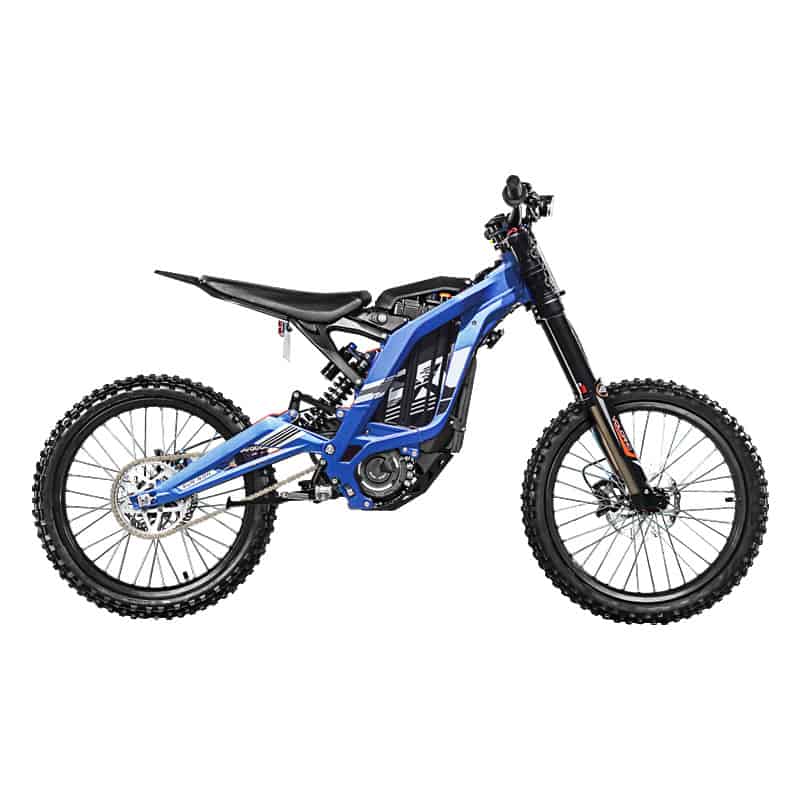
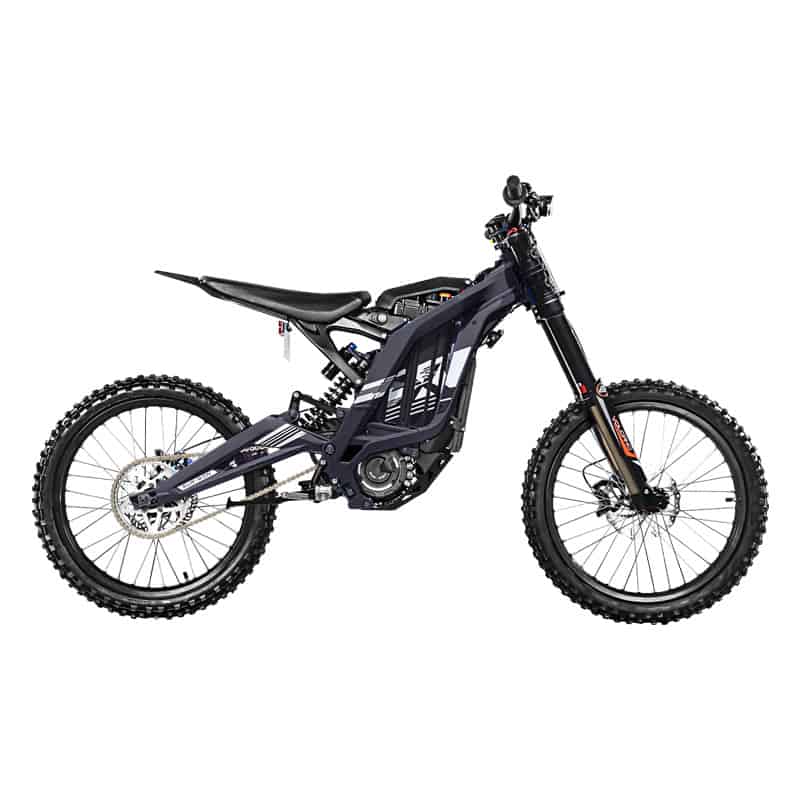
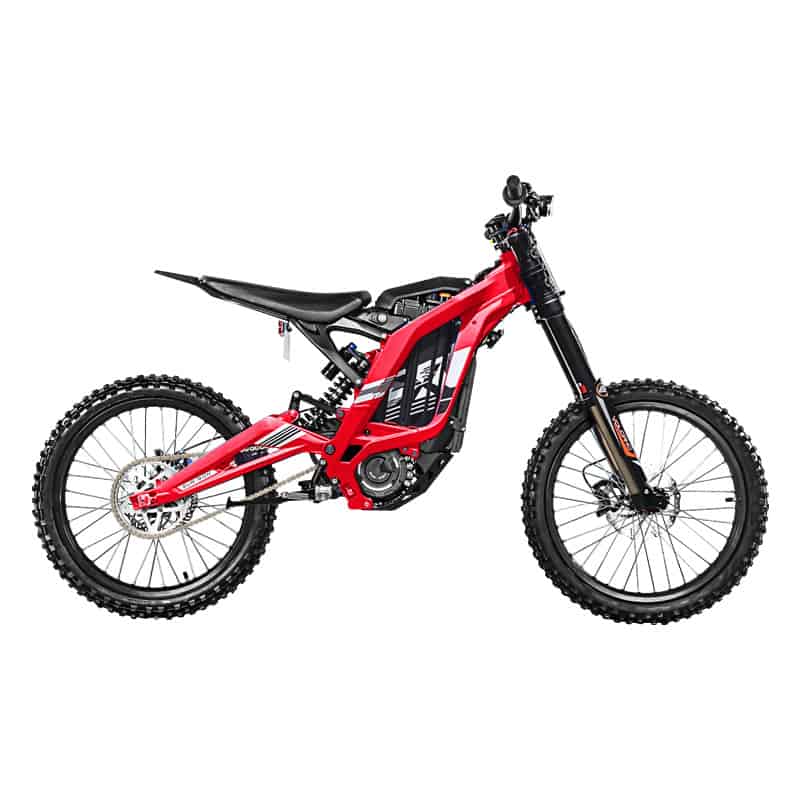
1. Sur Ron Electric Dirt Bike
We’ve heard much anticipation for the Surron electric bikes over the last two years in the United States and these are now available in Australia.
For the avid dirt bike enthusiast that is ready to move to an electric model, then it’s hard to go past this bike. These are available in both MX and street-legal varieties.
With pricing actually slightly less than a comparable 25cc dirt bike, this off-road machine is making huge headway into the Australian market.
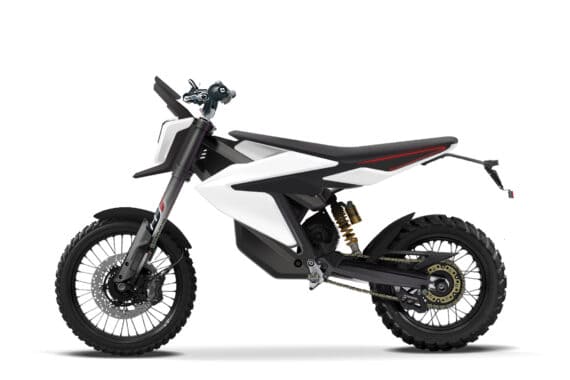
2. Volition Force
Looking for a genuine electric dirt bike that also looks like a dirt bike? Then you need to pay close attention to the guys at Volition. With a claimed 13kw motor, this is one bad-boy that we’re excited to see enter the Australian market in 2020.
With a claimed top speed of 130km/h, the team are putting the final touches on this model. It could very well be the first all-electric adventure motorcycle on the market globally.
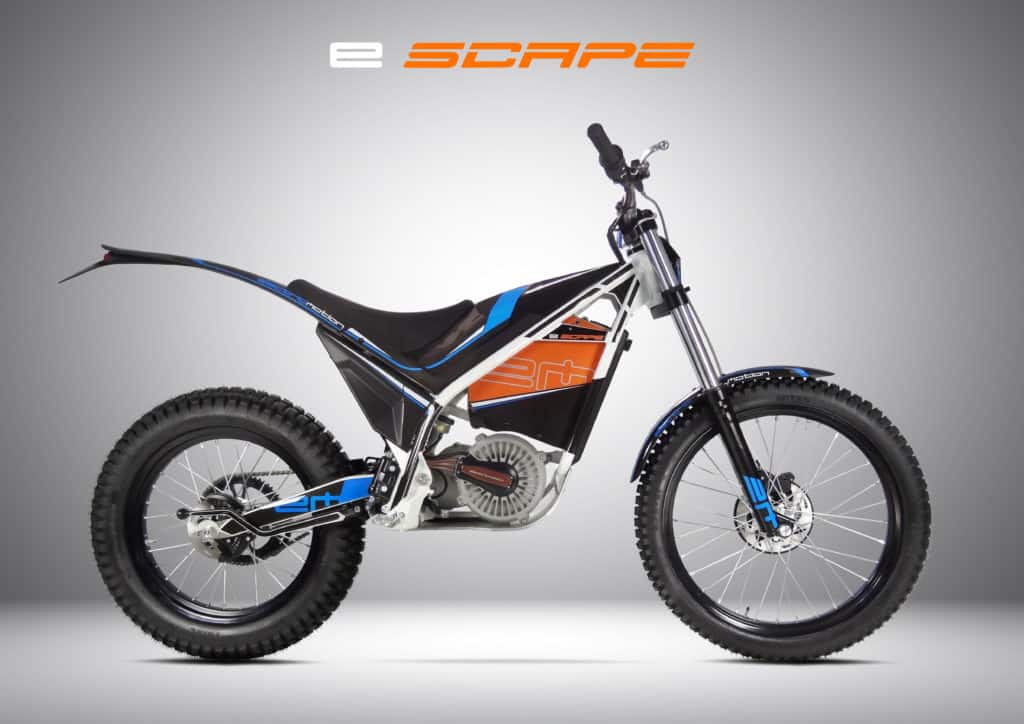
3. Electric Motion EM 5.7 Escape Sport
Another beast that is almost ready to order is the Electric Motion 5.7 Escape Lite. This is another true-looking MX/Trails bike and something that has an impressive specifications list. Released in 2019, they are already sold out and awaiting new stock in Australia.
We would love to see these become road-legal as per the Surron varieties. That said, as a bike that is modelled off the likes of Honda and Yamaha, it’s evident that this is a true weekend racer and trailblazer.
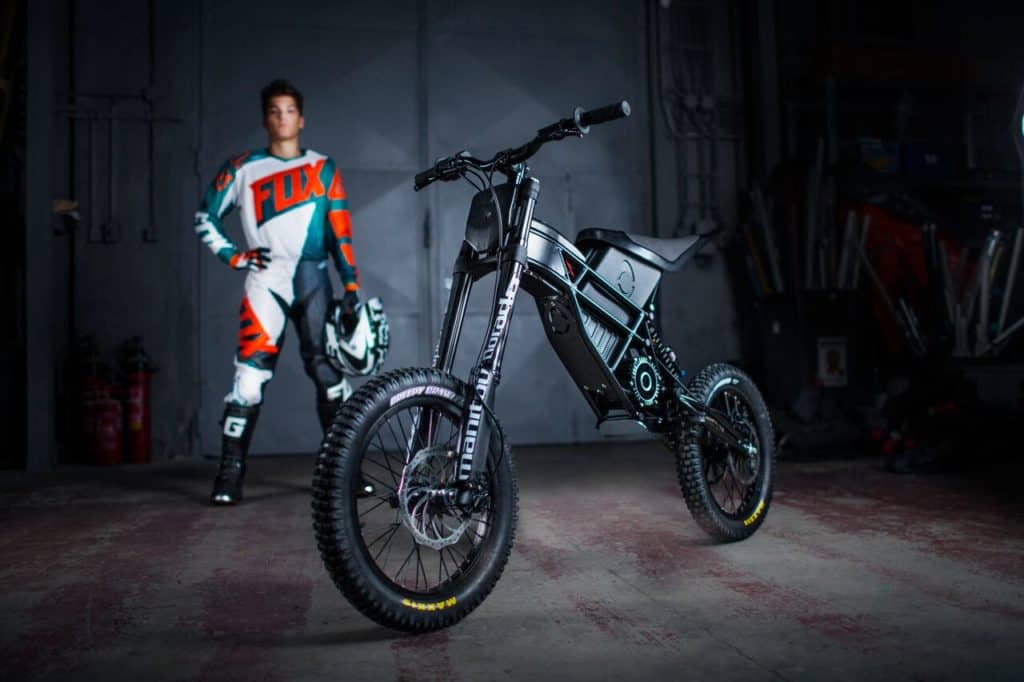
4. Kuberg FreeRider
Haven’t heard of the Kuberg Free-Rider? Neither have we until recently. This is one dirt bike here to take on the popular Stealth Bomber.
With 8kW and 12kW at its peak, this is a weapon on the local trails. You can control the power settings from your iPhone as well as share ride details and lap times.
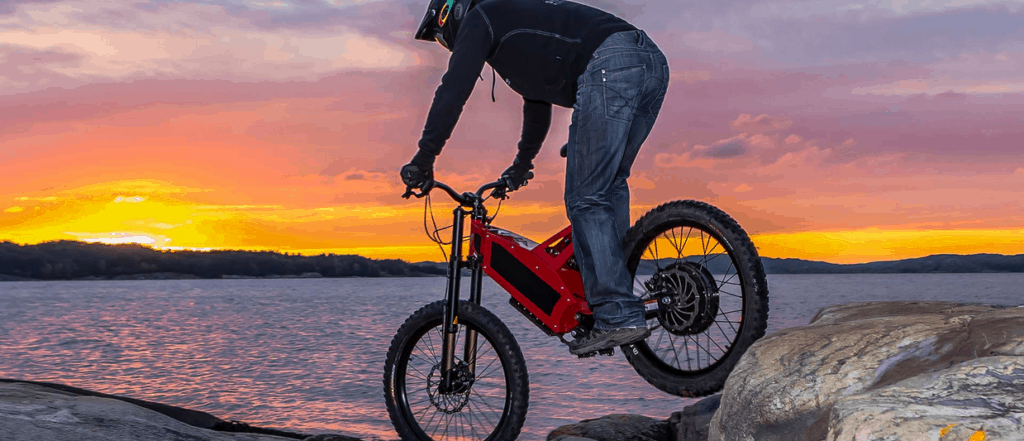
5. Stealth B-52 Bomber
Stealth was pretty much the first company on the scene several years ago here in Australia with their high power electric mountain bikes. Since then they have moved into the offroad motorcycle market with this dirt bike styled B-52 Bomber.
While not cheap, you can often find these for sale on Gumtree for a lot less. Given that this company has been in Australia for a long time now, they have a proven drivetrain and reliability with older owners now starting to upgrade. They have other lighter models available in their range, but the B-52 is the pick of the bunch.
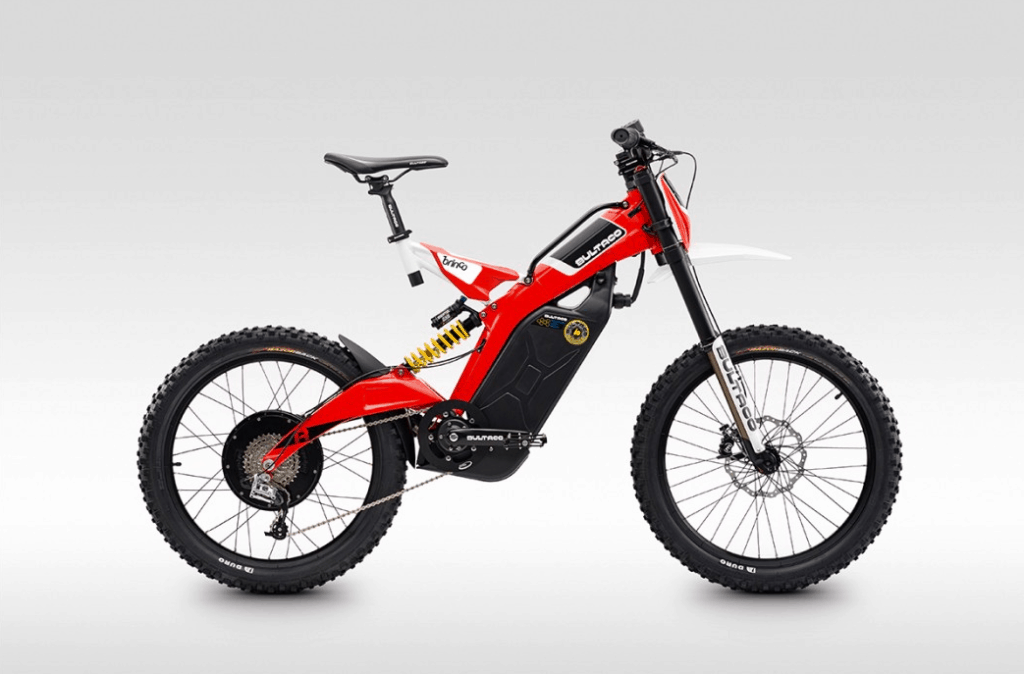
6. Bultaco Brinco R
Australia may soon get delivery of the Bultaco Brinco R which is the perfect blend between dirt bike and motorbike. It even has pedals! (Not that you’d want to pedal this at 39kg). Many electric dirt bikes try to look like their petrol equivalents and this one plays the part very well.
From the UK, these bikes come with the sport, touring and eco modes. It also has a removable battery unlike many of the eDirt bikes featured here. Needlessly to say we’re eager to get our hands on this machine in a few months time.
Electric Dirt Bikes for Kids
Australia has a range of electric dirt bikes exclusively for children. Compared to the heavy dirt bike offerings from Honda, Yamaha and KTM, these bikes are simply better. Children are able to develop their skills without the heavier weight, distracting sound or the threat of engine burns. Plus – no more clutch!
We’re writing an extensive guide on children’s electric dirt bikes and mountain bikes which will be here shortly.
Benefits to electric motorcycles
There are some instinctive benefits of using electric dirt bikes or even road-registered motorcycles for the daily commuting.
Some are obvious while some are not so obvious. Benefits for offroading enthusiasts go very far actually.
Now, we know that we don’t need to pay for fuel and the sound is very much reduced, but so is the weight. Now let’s look at some that many have overlooked:
No need to carry hazardous petrol jerry cans around
No clutch use making it easier to focus on actual riding
So much torque! These bikes make wheelies look super easy
The lower weight lets riders really throw the bike around on the trails
No need to worry about burns from the engine when crashing
Much easier maintenance. No oil changes. Mechanics become redundant.
Only requires mountain bike tyres which make tyre changes so much easier
Can be carried around on a normal bicycle rack instead of a trailer or van
Many spare parts can be sourced straight off a conventional mountain bike
Much easier to lift over fallen trees in the forest.
No fuel tank leaks on to your trousers
Did we mention the torque? Electric bikes are notorious for delivering a solid ‘kick’ when twisting the throttle so you’d better be prepared for it!
Getting out on the trails
We hope this list has helped you understand the numerous models that Australia has available either right now or very soon.
Just remember that the bulk of these battery-driven dirt bikes are for offroad use only. They can’t be registered and so you may be restricted to private property.
While they are lighter, they still have the potential to inflict serious damage to you. Wear your protection gear such as boots like any other motorcycle and we’ll see you out there on the tracks!