If you’ve been in dirt biking long enough, then you’ll know Seth Enslow. Seth’s name is synonymous with dirt bike stunts, records and accidents.
Many have labelled him as a hard-to-beat man. Someone who gets knocked down and keeps going, again and again.
Seth’s relentless pursuit of excellence on a motorcycle in the ’90s and 2000s sadly has been lost on this generation. However, there is plenty that we can learn from the dude who inspired a generation.
Seth Enslow – Beyond Crazy
Growing up, Seth was always relentless. He wanted to do big jumps. HIs parents, unfortunately, weren’t well off so it wasn’t until high school that they could afford a bike for him where his racing dreams started.
With his spectacular performance on the track, he soon made the trek to California to chase his MX racing dreams. As another letdown, this didn’t eventuate. I sometimes wonder what types of records Seth would’ve made on the tracks around the world.
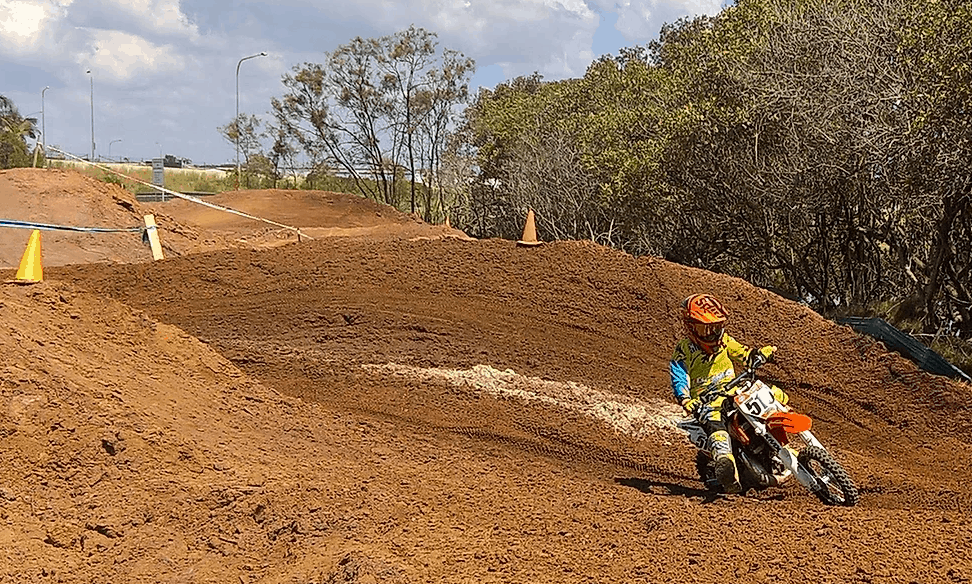
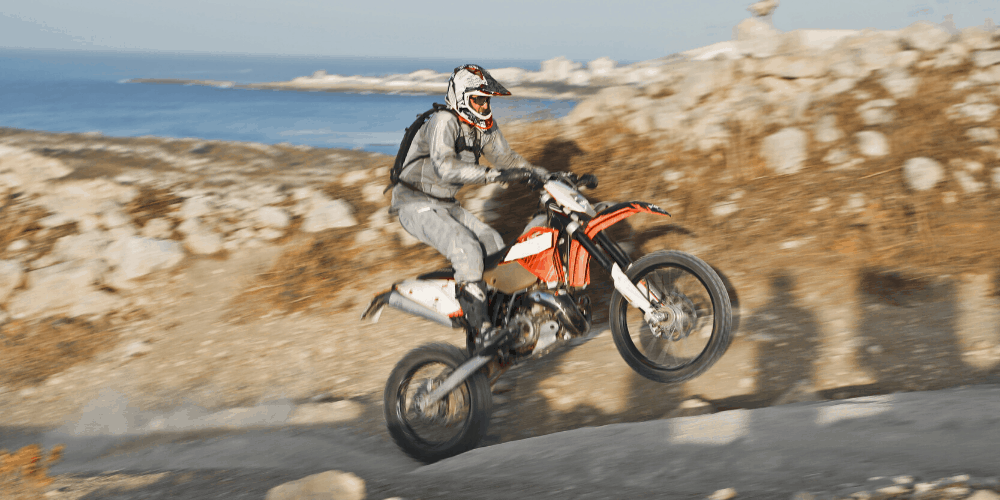
Seth Enslow more did jumps just like this rider has
However, Seth’s eagerness to “go big or go home” continued and he was soon into freestyle stunts and joining the Crusty Demons. From then on, it was truly game on for his crazy dream of always striving for more.
He’s attempted and accomplished numerous world record jumping attempts across North America. Some of the most famous include the sand dune jump (and subsequent crash) plus the jump over the house. Let’s not forget the jump he did with a Harley Davidson in Sydney, Australia.
Biggest jump
By far the biggest jump that Seth Enslow has accomplished sits at 301 feet and 10 inches which he accomplished in 2008, while a ramp-to-ramp jump of 183.7 feet was accomplished in 2010. He wasn’t greatly injured with any of these students, however, if you know Seth, you knew he could take a lot.
With many head scars and injuries, this is certainly a man who could handle a lot in the name of accomplishments. After all, that’s what the Crusty Demons is all about.
It’s unlikely today that Seth can beat his previous records based on his age. In fact, today he owns a tattoo parlor given the effects of motorcycle stuntwork on his body. But would we want to see him still jumping and doing stunt work? Absolutely. He inspired an era where dreams were possible on the track, not behind computer screens or TVs.
Seth Enslow Death
There are rumours circulating the internet and it’s time to lay out the facts:
Seth Enslow hasn’t died. However, a fatal accident occurred involving Seth which lead to the death of a police officer, not Seth Enslow. This was during the Sturgis Motorcycle Rally in South Dakota in 2006.
Sgt. Tyler Mathews of Bradenton Police Department, unfortunately, passed away and was survived by his wife and four children. During that crash, Seth did suffer and broken leg and ankle but is still alive in 2020. To the best of my research, there has been no outcome given publicly as to the investigation. That is – we’re not sure if Seth was at fault or not. Regardless, we’re sure that he feels for the family of Sgt. Tyler Mathews.
In a nutshell
Seth is clearly one of the most enduring guys to ever hit two wheels. He’s just as crazy as those who even reach the start line of the Dakar Rally.
He’s pulled off some incredible stunt work over the years and has built a reputation. While he’s not looking to break any more records or bones anytime soon, he’s still riding on two wheels from time to time.
Here’s someone who has pushed the limits of what humans thought was possible. In a cotton-wool world, we’ve found someone who broke all the rules. Legend.
When you’re learning to ride, the one thing that people often don’t tell you about is the right tyre pressure to run.
I mean – you’re educated on which bike to choose, where to ride and what gear to use. Even tutorials on how to ride more aggressively.
Why does no one talk about adventure bike tyre pressure? It’s interesting because not having the correct tyre pressures on ADV bikes can be devastating.
The best tyre pressures
Tyre pressures are important and in extreme situations, changing tyre pressures on your ADV bike can be vitally important.
The best tyre pressure for adventure motorcycles (ADV Bikes) offroad should almost always be the same pressures as you run on the street. That is – don’t air down your adventure motorcycle as they are HEAVY machines. Strong tyre pressure is needed to support the weight of the motorcycle, your gear and yourself on bumpy terrain.
For each bike, the tyre pressure will be different. Dirt-orientated adventure bikes can handle 14psi while the heavier bikes are closer to 20psi.
The best advice is to hit the trails with your street-set tyre pressure and adjust accordingly to the terrain. If you’re riding on hard-packed terrain then leave it set while sandy conditions can lend themselves to a 3 to 4 psi drop in pressure on the rear tyre to create more traction.
Why ADV riders are different
Motocross riders often mess around with their tyre pressures and it certainly has its benefits on the tracks. Even a 2psi change can add an additional 3 seconds on to a lap time.
However, we’re adventure riders. We’re simply cruising around where performance isn’t as important as safety and longevity of your self and your gear.
ADV bikes are often overloaded by beginners with too much gear while having street-orientated tyres. When they go and then lower their tyre pressures, they are certainly putting themselves and others at risk.
Risks include bending the rim or getting a pinch flat on the trails. As a new rider, the last thing you’ll want to do is change a flat tyre on the trails.
Again – we recommend keeping your tyre pressures the same for most riding conditions unless it’s very technical/rocky terrain. Even so, only make a slight release of the air (2 psi for instance) and then go for a 1-mile test ride. If you’re having trouble with the handling then it’s time to pump up again.
Recommended gear for tyre pressure adjustments
We highly recommend good quality gear that’s unique to motorcyclists. If you use a car tyre pressure gauge on your adventure motorcycle, then the reading won’t be so accurate. Unlike cars, offroad motorcycles are almost always under 20psi. So look for a tyre pressure guard specifically for adventure riders.
As for pumps, find a quality brand that people are leaving solid reviews on. The pump should be small so you can fit it within your luggage while also being big enough to get you pumped up quick enough. Some riders like to use bicycle pumps, and while these work, they do tyre you out given that the capacity of ADV tyres is much bigger.
Lastly, get yourself a good tube repair kit with spoons that are designed for ADV bikes. The smaller sets for MX bikes aren’t adequate as their tyres are smaller and you’re likely to bend or break the spoons. Stick with the big brand names for assurance on the trails.
Your tyre pressure is probably fine
We’ve been pretty clear by now. For dirt bike and MX riders, they will adjust their tyre pressures but they are also riding much lighter and on muddy/sandy trails.
ADV riders are so much different. We’re carrying loads and a tyre running off the rim can be deadly. Leave yourself fully inflated initially and then decrease a little while testing the differences in handling. Again – this depends on the bike you have, the terrain you’re in and the gear that you have.
Brisbane dirt bike riders are always on the search for new places to ride their motorbike, whether registered or motocross. Here are the 9 best options.
As the city gets bigger and bigger, more riding areas become progressively closed. It’s disappointing but that’s the way things are. We do look forward to more mainstream electric dirt bikes being released in Australia, but until they’re mainstream, there are only a few solid options out there.
Brisbane’s Best Places to Ride a Dirt Bike
Frontaer has done the heavy lifting for you. The research into the best riding spots around Brisbane shows us that we do actually have some pretty damn good options to ride trail bikes.
Ideally, your bike has to be registered to have all the options available to you. However, we’ll include some MX parks on this list too.
Here are the best dirt bike riding places near Brisbane:
1. Lockyer National Park
Head west and after an hour’s drive, you’ll come across the Lockyer National Park. Dirt bike riding is approved here by the Queensland Government but you will need to be licensed and registered.
There are numerous roads leading in and out of the national park, most of which is unsealed. You’ll be sharing these tracks with 4wd enthusiasts and these trails do get busy on weekends so be careful!
Camping isn’t permitted here but you can get some great accommodation nearby in Toowoomba. Adventure motorcycle riders will especially love the Lockyer National Park for a quick getaway.
2. D’Aguilar National Park
There is some fantastic riding trails within D’Aguilar National Park for dirt bikes coming from Brisbane. The track is more technical and tight especially around the Mount Mee area but you’ll find most of it relatively easy.
Horse riders, hikers, mountain bikers and 4×4 drivers also share these tracks. If you do come across others, some basic manners and respect will go a long way to keep this majestic place open to the rest of us.
3. Queensland Moto Park
This is the ultimate Moto Park for Brisbanites. On the weekends it’s certainly packed so try to plan for a week day ride. Gold Coasters also love this place.
You can ride unregistered dirt bikes and quad bikes here and this place is only an hour from Brisbane. They are very family friendly with tracks set aside just for kids.
4. Willowbank MX Park
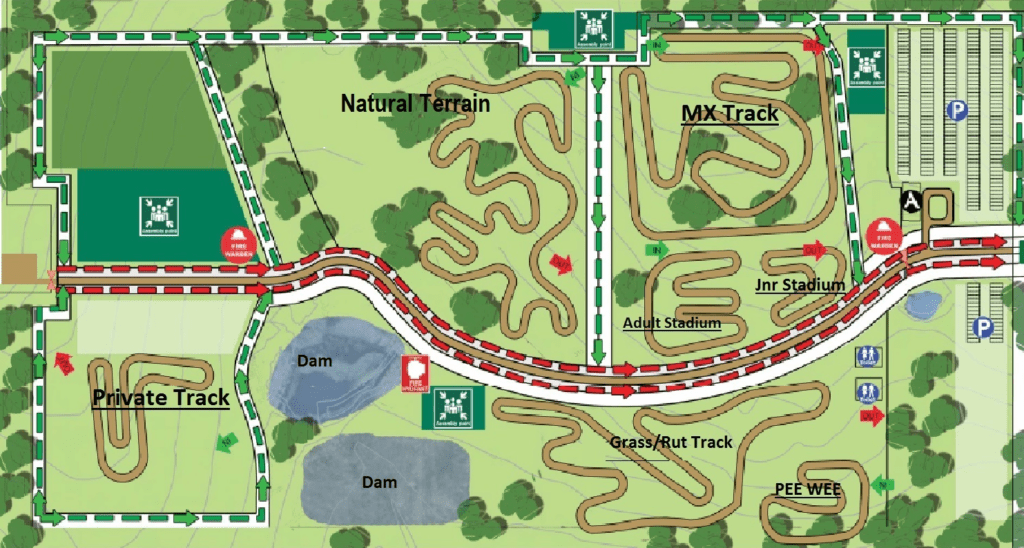
Willowbank MX Park is an awesome spot and only about 25 minutes from Brisbane CBD. They welcome all types of dirt and trail bikes of any engine size.
The reviews on Willowbank MX Park are very high and there’s a clear reason for it:
Multiple tracks to choose from.
A flat training area for complete beginners
A Pee-wee and junior riding track for the kids
Long MX tracks that aren’t your typical boring design
Clearly the designers have really put some thought into this.
If you’re looking for thrills and don’t have a motorcycle licence, then this place will let you in. 2-stroke or 4-stroke…Willowbank is the place to be!
5. Phoenix Creek Motocross and Camping
If you’re looking for a family-only place, then Phoenix Creek is the place to be. The reviews are low because they only let certain people ride, and that’s good people. If you’re looking for hardcore extreme tracks with the attitudes to match, then this place isn’t for you.
Phoenix Creek requires a decent drive though. It’s 2 hours out of town and past Woodford. The kids will love it and don’t get intimidated by disrespectful riders because…well…there isn’t any!
And just so you understand: You can only ride here if you’re riding with children. It’s a family dirt bike park and designed like that from Day 1.
Toilets, showers and camping provided at reasonable costs. The trip up is definitely worth the drive and the kids just won’t want to leave.
6. Fort Lytton Motocross Club
This is the only motocross facility within the Brisbane city area. They run races as well as practice sessions for adults, teenagers and children. If you want coaching then this is the place to go and they can even lend you a bike which you can hire for the lesson.
They also run regular races. If you want to spectate and get your kids into motocross, then this place is only a short drive from the Brisbane CBD. From there, they’ll be begging you to get them dirt bikes and start riding the local tracks and trails!
7. Moreton Districts Motocross Park
This place is about 10 minutes north of Ipswich and is a great place for the family. The MX track itself has good whoop sections to help you improve your skills.
Update: The track has since relocated to Willowbank.
8. Mick Doohan Raceway
If you join the North Brisbane Junior Motorcycle Club then your children can ride the Mick Doohan Raceway. However, so can adults as well!
This is really just a raceway and not so much a motocross or enduro track, unfortunately. But then again, if you like to drift sideways, then this is the place for you.
9. Beerburrum/Beerwah State Forests
We’ve left the best until last! Go for a spin inside Beerburrum or Beerwah State Forest and your heart will be pounding intensely from the chest!
Getting there will require a ute, van or trailer unless you have an adventure motorcycle. And once you get there, you won’t want to leave! Camping is possible at the Coochin Creek camping area.
Be mindful of the many 4×4 vehicles that inhibit this area, especially on weekends. There might be other dirt bikes coming the other way on tight corners too.
The Glasshouse Mountains itself is Brisbane’s favourite enduro and trail bike riding area. You’ll have a mixture of tight technical terrain, open flowing fire trails along pine forests and rainforests.
Tips to look after yourself
Now that you’ve found some awesome riding spots not far from Brisbane, we want to keep you safe on your dirt bike. Here’s what we can recommend:
Wear all your protective gear. Helmet, goggles, gloves, trousers, jersey, elbow and knee pads plus a good set of motocross/trail boots or adventure motorcycle boots. Also, don’t forget your hydration pack as it gets bloody hot in summer.
Take a GPS. In some spots the mobile phone signal is non-existent and you can’t rely on your Google Maps. Any good motorcycle GPS for offroad use will be enough to get yourself back to the start of the track, especially if you’re deep in the forest.
Make a weekend of it. Dirt bike day trips from Brisbane are certainly possible but if you’re going for an enduro ride, then take your camping gear as well.
Be respectful on the trails. There are inherently going to be others also using those same tracks. Dirt bike riding spots near Brisbane have been shutdown in recent years due to noise complaints and riders simply acting irresponsibly. Do the right thing and we’ll keep these beautiful spots open for generations.
Dual Sports Motorcycle Riders Association Brisbane
Our best recommendation for enduro riders is to join the DSMRA (Dual Sports Motorcycle Riders Assocation) which has affordable memberships. When you join the club, your money is used to fund trips and get insurance so that private property is opened up for organized group rides.
They plan these in advance and the group goes above and beyond. Many SE QLD ADV riders are inside this group to make friends and discuss new tracks and routes. They are always on the look out for private land owners who will be fully insured should something happen.
In summary
Be safe out there! Clearly Brisbane has some good riding areas. Head up to the Sunshine Coast and you’ll find even more dirt bike riding areas to really hone your skills.
Catch you out on the offroad tracks and twist that throttle hard!
Roost deflectors stop gnarly rocks and tree branches from knocking you off your dirt bike. We’ve found the 10 best models to protect your chest.
Roost deflectors really do help to make a more comfortable day out on the MX tracks or country trails. However, please note that they don’t provide adequate chest protection and aren’t rated for crashes.
If you’re searching for genuine chest protection, then check out the best dirt bike chest protectors in the market. Those are CE-rated for high-speed riders.
Let’s start these engines.
Best Roost Deflectors
The main role of a roost deflector is to stop you from low impact injuries. These include:
Tree branches that clip your shoulders and chest
Rocks and gravel that is kicked up by riders in front
Protection against rashes from your dirt bike jersey
Often these roost deflectors are simply cheap plastic. We would certainly recommend that you pay that bit extra and get quality equipment to protect you out there.
Here are the most recommend dirt bike deflectors:
1. Fox Racing 2022 R3 Roost Deflector
When you think of motocross, you think of Fox. They have certainly led the way in the industry over the years. The R3 Roost Deflector is one cool bit of gear.
They have these 3 versions noted above which are basic in their design and very affordable. We love the amount of airflow given.
Then you’ve also got the R3 for women. This model is the best roost deflector for women of all heights and sizes. All in all, some fine protection for those on a budget.
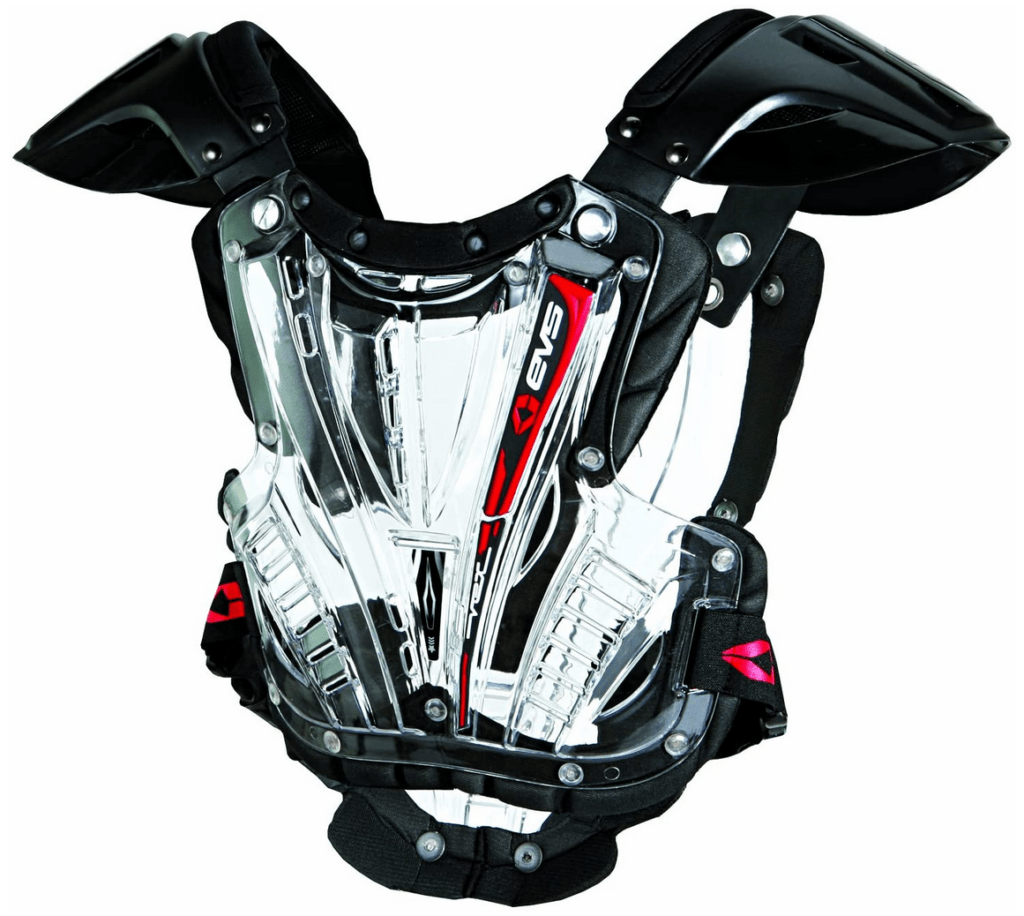
2. EVS Sports Men’s Roost Deflector
Looking for something a bit less plastic-y? Then the EVS Sports deflector is for you. The design is softer while being more professional for the weekend rider.
This is a vest design with no protection for the biceps. However, being EVS, it does provide solid protection against roost in the chest region.
As a roost protector, it’s also compatible with neck braces paired with good ventilation and a secure fit for more confidence at high speeds.
3. Leatt Unisex-Adult Chest Protector
If you know Leatt, then you know that they don’t mess around. From innovating the neck brace to protect riders from the United States to Brazil, Australia to the UK and everywhere in between, they know protection gear like the back of their hands. The 4.5 Chest Protector is no different.
Is this a cheap roost deflector? Yes, that depends. If you value your chest and want sheer comfort when riding, it’s very cheap. If your wallet is more important, then there are cheaper options in the market.
The reviews on the Leatt 4.5 are impressive and this unit weighs just 1 pound!
4. Alpinestars A-1 Roost Guard
Need a bit more protection? The Alpinestars A-1 has you covered quite well.
The shell guard on this model is actually certified to EN14021. Essentially this means you’re protected from impacts when you actually crash, not just impacts while riding at speed.
The ventilation on this model is impressive! It’s perfect for a hot and dusty track or humid area.
5. EVS Sports Chest Protector
Love your riding jersey and want others to see its epic design? Then get this bad-boy today!
The profile on this design is much lower than usual. It’s a smaller roost deflector ideal for those who want a minimal approach with something that doesn’t get in the way.
It’s also very low weight too while protecting your back with its poly carbonate construction.
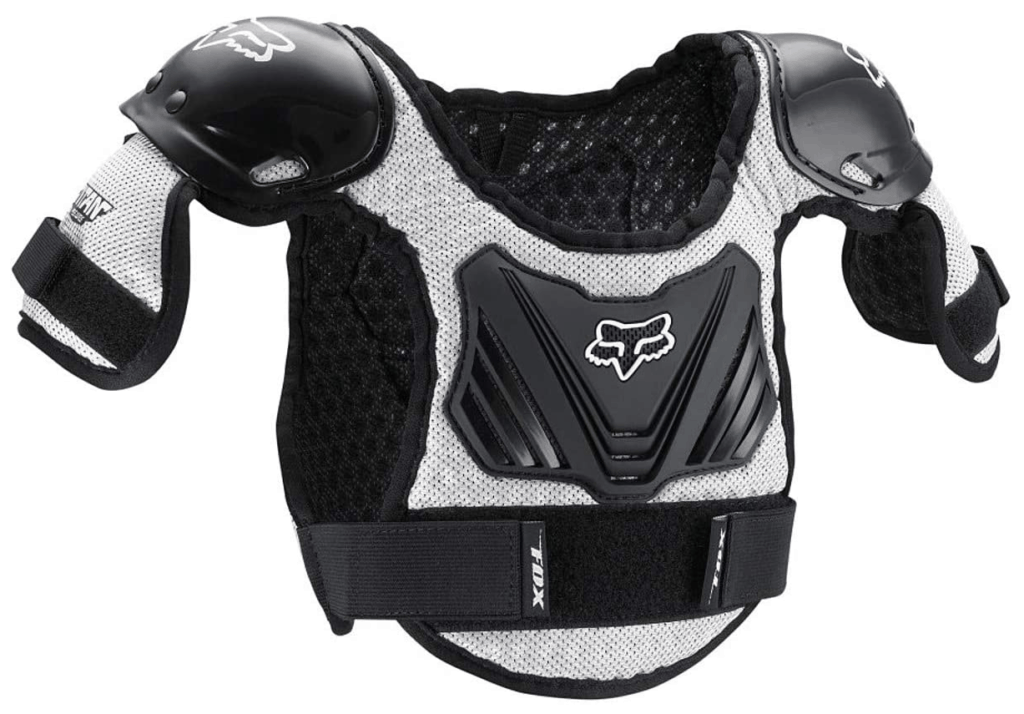
6. Fox Titan Kids Roost Deflector
Are you searching for the best kids dirt bike roost deflector? Injuries when riding are something that kids will inherently encounter and recommend full protective gear for kids who are either riding MX or the local dirt trails.
Fox has the Titan series and from our experience, provides a solid amount of protection from roost for children of all ages. Two things that let this model down slightly is the lack of ventilation and the higher weight than an adult chest protector.
However, at 1.4 pounds your child probably isn’t likely to notice. Plus the design is very attractive and kids are often more interested in twisting the throttle and getting into everything.
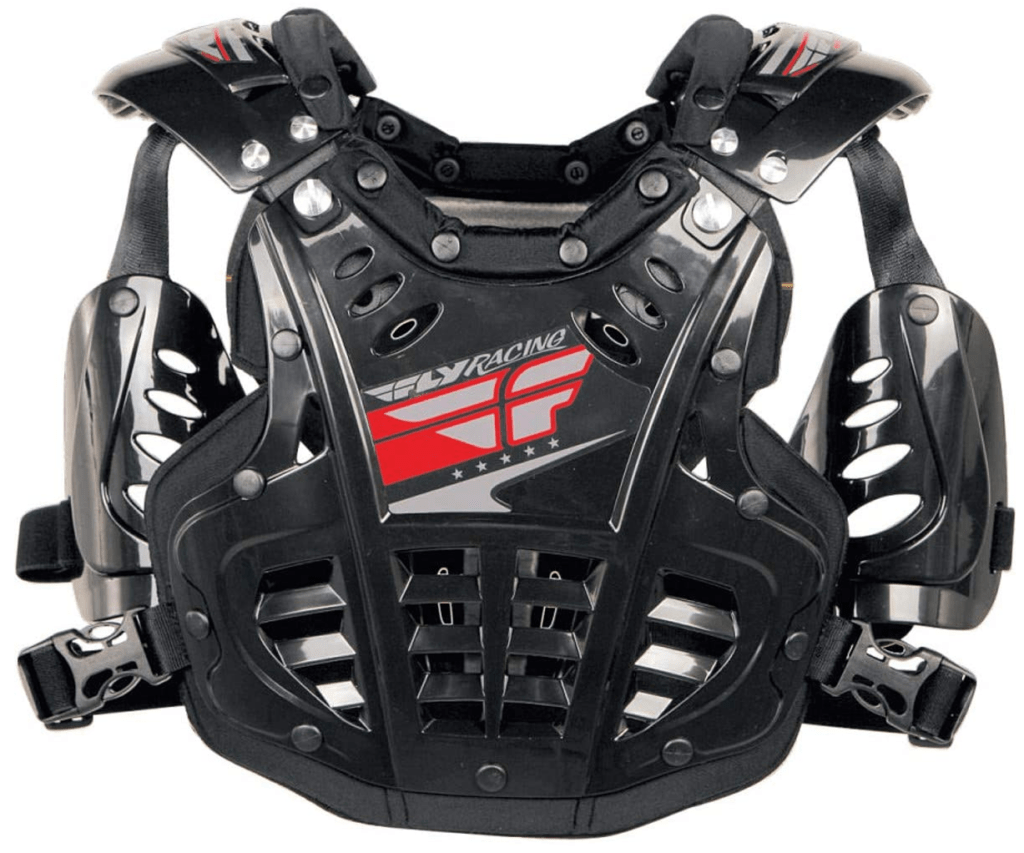
7. Fly Racing Mini Convertible II Roost Deflector
Another minimal design for adults is the Fly Racing Mini Convertible II. Because it’s available in both red and blue, both Yamaha and Honda riders can find their preference.
This model is super easy to put on and off. You’ll have easy movement while enjoying lots of comfort. The ventilation on this model is far superior than most other models.
For a cheap roost deflector that offers some good benefits, then it’s hard to look past this model.
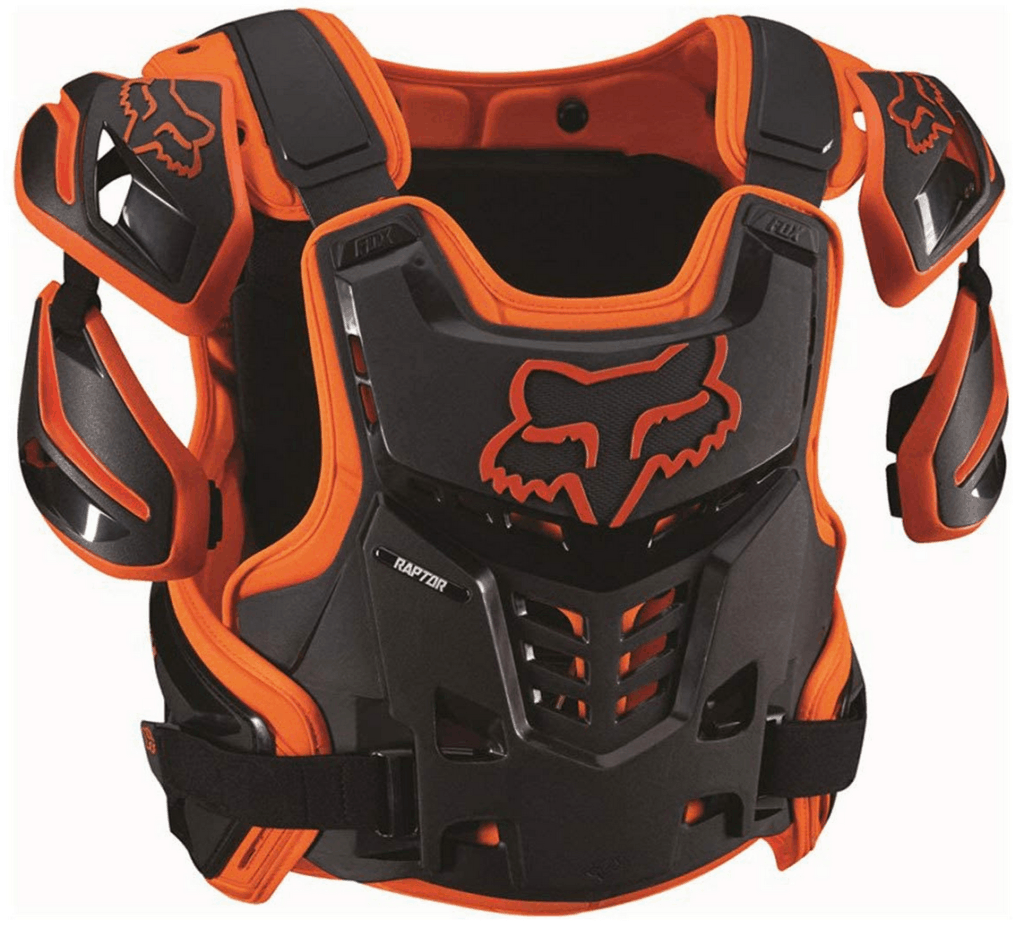
8. Fox Racing Adult Raptor Vest
We’re going to flip the switch and go for something expensive. The Fox Racing Raptor vest comes at 2x the price of your average roost deflector.
One thing to note is the CE certification on your back. However, it does leave your chest open and if you’re looking for genuine protection, check out the alternative guide we mentioned at the top of this post.
KTM riders looking for a high quality roost deflector or chest protector tend to go for this model. It’s adjustable and being very comfortable to wear, but with less ventilation than other models in the market.
9. Fox Racing Raceframe Roost Deflector
Yes – it’s Fox twice in a row. Now we’re looking at their Raceframe roost deflector. This model is popular with mountain bike riders heading downhill just as it’s popular with trail bike and MX riders too.
The simplicity of this design paired with its ventilation ticks a lot of boxes for us. The black design really goes with everything in the market.
With dozens of reviews, users have found this one to be exactly what they were searching for.
10. Fly Racing Undercover II Pullover Roost Guard
Unlike many other options that we’ve provided in our guide to roost deflectors, this model is very different. This is basically a heavy-duty shirt that you merely put on with your jersey going on top.
There isn’t much fuss with this design. You merely put it on and your jersey then is worn as normal. Most other riders won’t even notice that you’re wearing anything.
At this time, it’s hard to source this design but if you can buy one internationally, then you’re on to a winner!
One final inclusion
We’ve got a bonus! And that’s the Troy Lee Designs black roost deflector.
Troy Lee Designs have really thought of everything here!
This is the most expensive that money can buy, but also vastly superior too!
You’ll have your chest, ribs, back, shoulders and upper arms very well covered. This model, in particular, is popular with enduro riders as they need superior protection but also want a lot of movement as well both when standing on the pegs and sitting on the saddle.
Buying Guide
So then, with so many options on the market, how do you know which one to buy? We’ve put together this buying guide to help you out.
This buying guide applies to both kids needing their own roost deflectors as well as adults too.
Ventilation
The last thing you’ll want is bad ventilation. This is only going to make you sweat more on the tracks and trails.
By having solid ventilation, you’re able to focus on riding and not getting a free sauna when riding on a hot day. Look at the roost deflectors on this list and observe how much ventilation they provide.
Materials
Almost all of these use a hard plastic design. When rocks are flying into you or you’re powering past trees at 50 miles per hour, nothing else can really deflect these impacts.
By going into a dealership, you can check just how thick these are in person and make a decision based on the level of protection you desire.
Pricing
Often it’s best to spend up for the best. The cheap Chinese options that you’ll find on eBay and Amazon simply don’t live up to expectations in the real world.
On average, dirt bike roost protectors cost around $100 for a solid unit. You might pay up to $300 for a superior model like Leatt.
Colors
Often riders want the roost deflector color to match their own riding outfit. Given the multiple color options on this list, those who are seeking orange, red, yellow or blue will find something that suits their trail bike.
A great idea is to select a black design. This way you can keep the unit when you’re upgrading to a new dirt bike next year.
Roost deflector with neck brace
It’s hard to find a roost guard that also has a neck brace built in. These are two seperate units and often from two seperate brands.
As for fitment, most roost deflectors will fit with a neck brace. It’s always best to stick with the same brands and we recommend Leatt primarily.
Hydration pack with roost deflector
What we would love to see is a roost deflect paired with a hydration pack. The closest in the market is the Leatt Hydra 4.5 which is actually a chest protector, not roost deflector.
The Fly Racing Stingray is the closest thing you’ll find here with good reviews online. We would love to see more options in the marketplace.
Where to buy
There are numerous dealerships across the country which stock exactly what you’re searching for. We recommend this approach because you’ll be able to try on a roost deflector in person.
Try on different brands: Fly, Fox Racing and Leatt. If they don’t stock these brands then you’re completely in the wrong shop.
Likewise, you can buy online. Countries like Australia, Canada, the United Kingdom and South Africa have their own country-specific online stores. For those in the United States, using Amazon is the most common way to order any MX gear.
Using coupons and discounts is often a great way to save. Alternatively, look on Craigslist or Gumtree for roost deflectors as these are often cheap and with minimal use as some riders replace them each season.
In Closing
We would recommend a roost deflector if you’re wanting to avoid things from striking your body at speed. For protection when crashing at 60 miles per hour, these are woefully inadequate.
In fact, they tend to rise up and cut into the neck of a rider. This is why we recommend a chest protector instead of a roost deflector. Two very separate items.
Let us know in the comments which one you prefer.
For us, we’d always prefer to be on full throttle!
One of the best things to do on a dirt bike is to go sand riding. It’s a lot of fun if it’s done properly.
Many riders prefer to stick to the mud or rocky trails as they think the soft stuff is too challenging. While it’s certainly twitchy, once you master it…it will open up a whole world of fun.
Dirt bike sand riding is actually easy and a lot of fun too. Whether it’s the dunes, the beach or merely sugar sand, let’s help you get started today.
Getting started with dirt bike sand riding
First up – dress the part. Even though you’re going to fall on sand and it will be soft, a dirt bike helmet just isn’t enough. Wear all your standard protection gear.
It’s also best to pick your day well. If it’s recently rained then this is a good thing as the sand is wet creating better traction and control for the rider. Some riders head to the beach where they can better hone their skills and develop their technique on their own bike.
Now, before you go tearing up, you’ll want to lower your tyre pressures. Dirt bike riders often lower their tyre pressures anyway but ADV riders are apprehensive, however, you can lower a few PSI to create a wider rear-tyre footprint. This is going to reduce the risk of getting your dirt bike bogged in the sand.
The 3 basic fundamentals
There are 3 basic fundamentals to win at this game of sand riding. Once you both know these techniques and master them, then you’ll be blasting sand everywhere in no time.
Such techniques require lots of practise so keep at it. Essentially, it’s hard to learn from behind a screen.
The 3 fundamentals of sand riding are:
Keeping powering on forever. You really need to keep that gas planted and stay high in your rev range. Go to a lower gear if you need to, but keep that power blasting through. As you keep that power on, the technique lightens the front wheel and allows the rear tyre to dig further in for traction.
Let your knees grip the bike. Too many beginners make the mistake of letting their arms go into a death-grip on the handlebars. Sand is naturally twitchy and you’ll be inclined to hang on tight, but you shouldn’t. Instead, use your knees to grip the fuel tank and let those arms go relatively loose.
Your body position is key. Don’t sit on your dirt bike unless you have the confidence of a Dakar Rally rider. You need to be in ‘attack mode’ with your knees and elbows bent, while also being as far back as possible. Since you have the power on hard, this will naturally be possible.
Literally – that’s it. When it comes to turning, you certainly can’t turn as you typically do on a forest track. Instead, you need to lean mildly into corners while powering on. Essentially, you need to plan your turns long before you’ve done it.
Wheelies are recommended
You might notice that a lot of dirt bike riders pop wheelies when riding on the sand. Not only is this OK, but it is recommended and often a by-product of good body positioning and throttle control.
As you do these wheelies, it stops the front tyre from charting its own course through the sand. Unfortunately given the volatile nature of dirt bike riding on sand, it’s hard to prolong these wheelies so be prepared for some instability when landing.
If you get to the point where you are regularly lifting the front tyre off the ground, then this is the ideal point. If you need to keep that front tyre down, then simply pull the clutch in slightly.
The right bike for sand riding
While those fundamentals are important, so too is your dirt bike choice. Taking a 150cc farm bike or a 1200cc BMW are both not recommended.
A 250cc dirt bike can ride on sand but only if it’s 2-stroke. 4-stroke 250’s will struggle unless the rider is very light and is well experienced on the sand.
We would recommend a 450cc 4-stroke at a minimum so you can have a good technique to stay upright. This is typically what Dakar riders use during their annual rally with much success.
If sand riding is something that you’ll expect to do regularly, then look at tyres which are sand-orientated. These have paddles as opposed to knobs.
One thing to note
Dirt bike sand riding is easy for you once you practice it, but very hard on your bike’s components. You’ll probably have to take additional fuel with you while ensuring you clean it properly after each ride. This is definitely true for riding on the beach since saltwater is terrible for dirt bikes.
Light CRC spray is great for your chain as it deflects sand from sticking to it. Also, some salt-away spray is a good idea for some components.